- Brand
- ACG
- Type
- Branding
- Published
- 6 October 2026
- Score
- 3.50 / 5
Nike rebuilt ACG from its 1989 brief and ran it all the way to the Alps
On February 2, 2026, Nike folded its trail line into a standalone All Conditions Gear: the 1989 triangle, a signal orange, and a voice that refuses to take the mountain seriously. Two days later it was painted on a locomotive bound for the Orobic Alps.
ACG · Branding · 6 October 2026 · Score 3.50
The 1989 brief
On February 2, 2026, Nike folded Nike Trail into All Conditions Gear and relaunched ACG as an outdoor-performance brand of its own, with its own address, its own Instagram account and, by March, its own store. Bloomberg filed it alongside Jordan and Converse, the brands Nike runs under names other than its own.
Aaron Belchere, ACG’s VP and Creative Director, dates the work to “about two years since a group of us sat down and really mapped it out.” The starting point was in Nike’s archive: the document ACG was founded on in 1989, which sets three requirements. The products must be the best, they must be noticeably different, and they must be versatile. The relaunch treats it as a brief that was never closed.
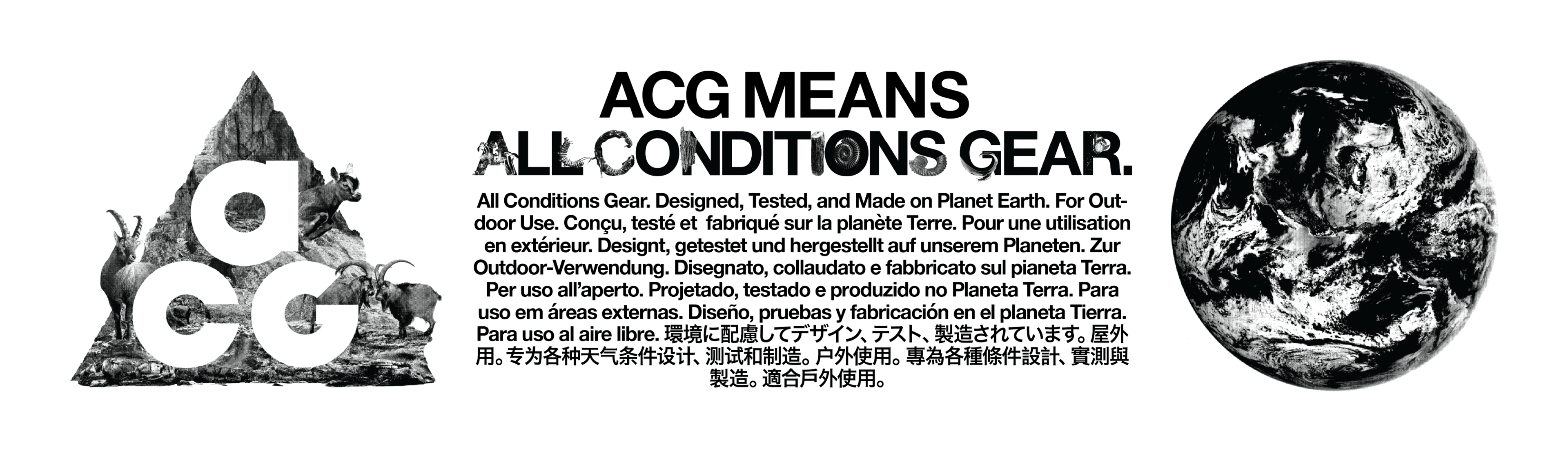
The 1989 brand was built by a team under Tom Clarke and Kirk Richardson, and art director Ron Dumas shot its first catalogue on Castleton Tower in Moab. Its tagline was “Designed, Tested, and Made on Planet Earth.” That line is back, now with “For Outdoor Use.” added, set in eight languages on ACG’s own site.
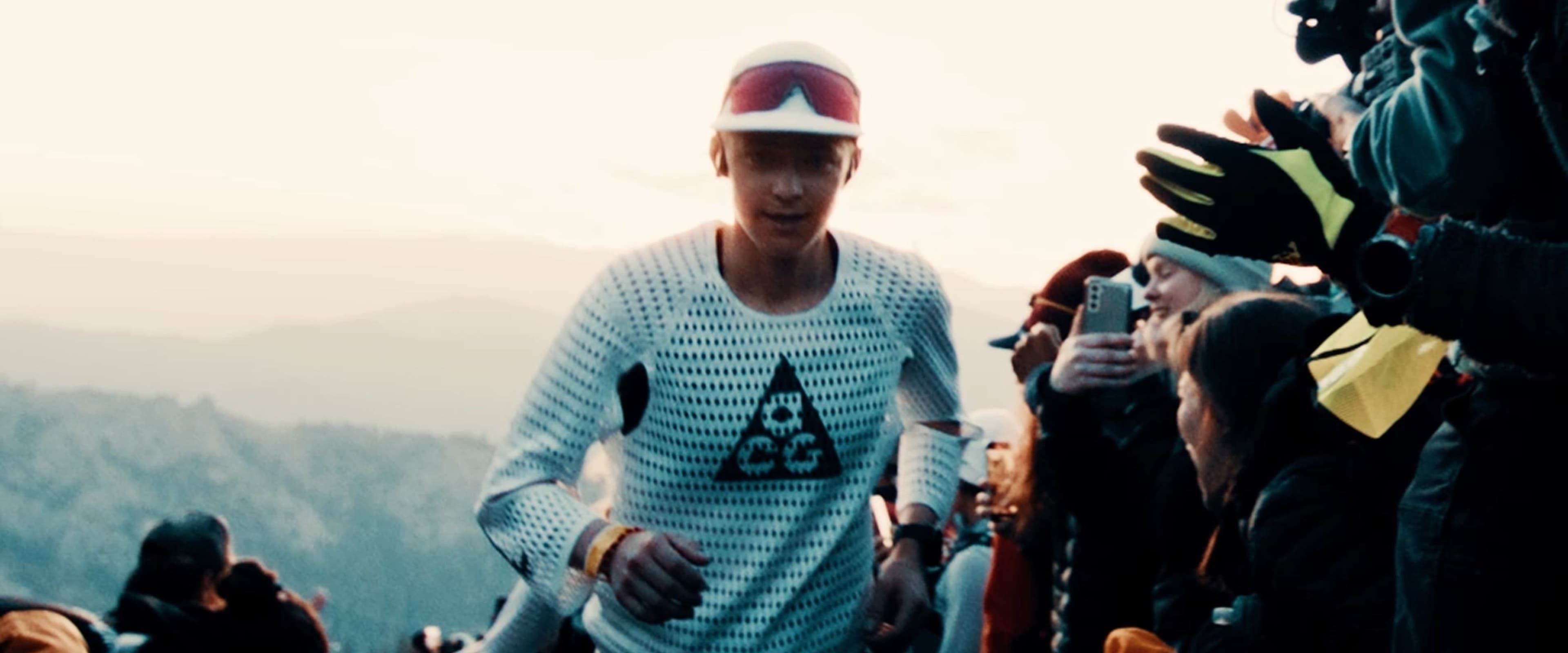
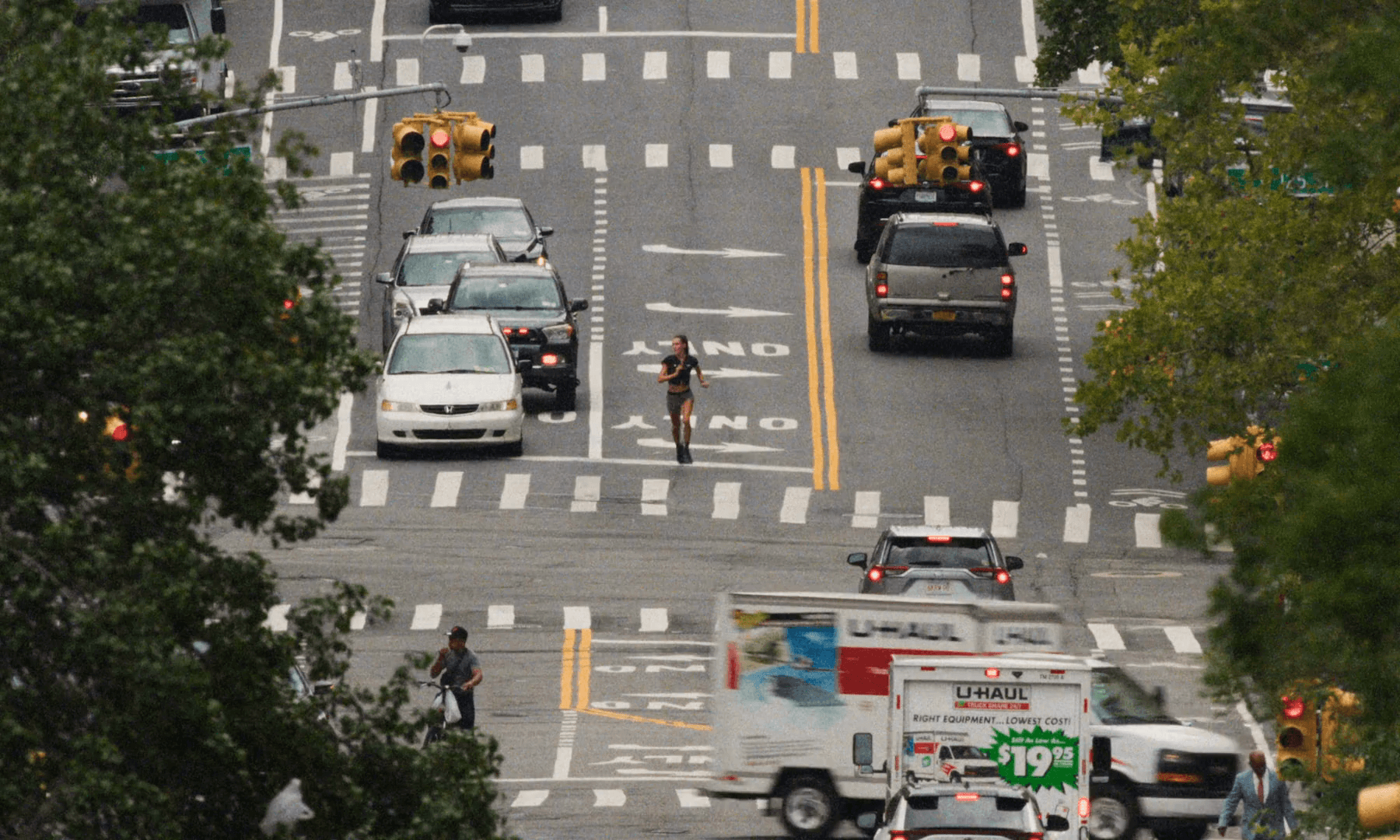
Wild Planet, the 60-second launch film. Directed by Jeff Tremaine for Wieden+Kennedy Portland. Courtesy of Nike
This wild to ride
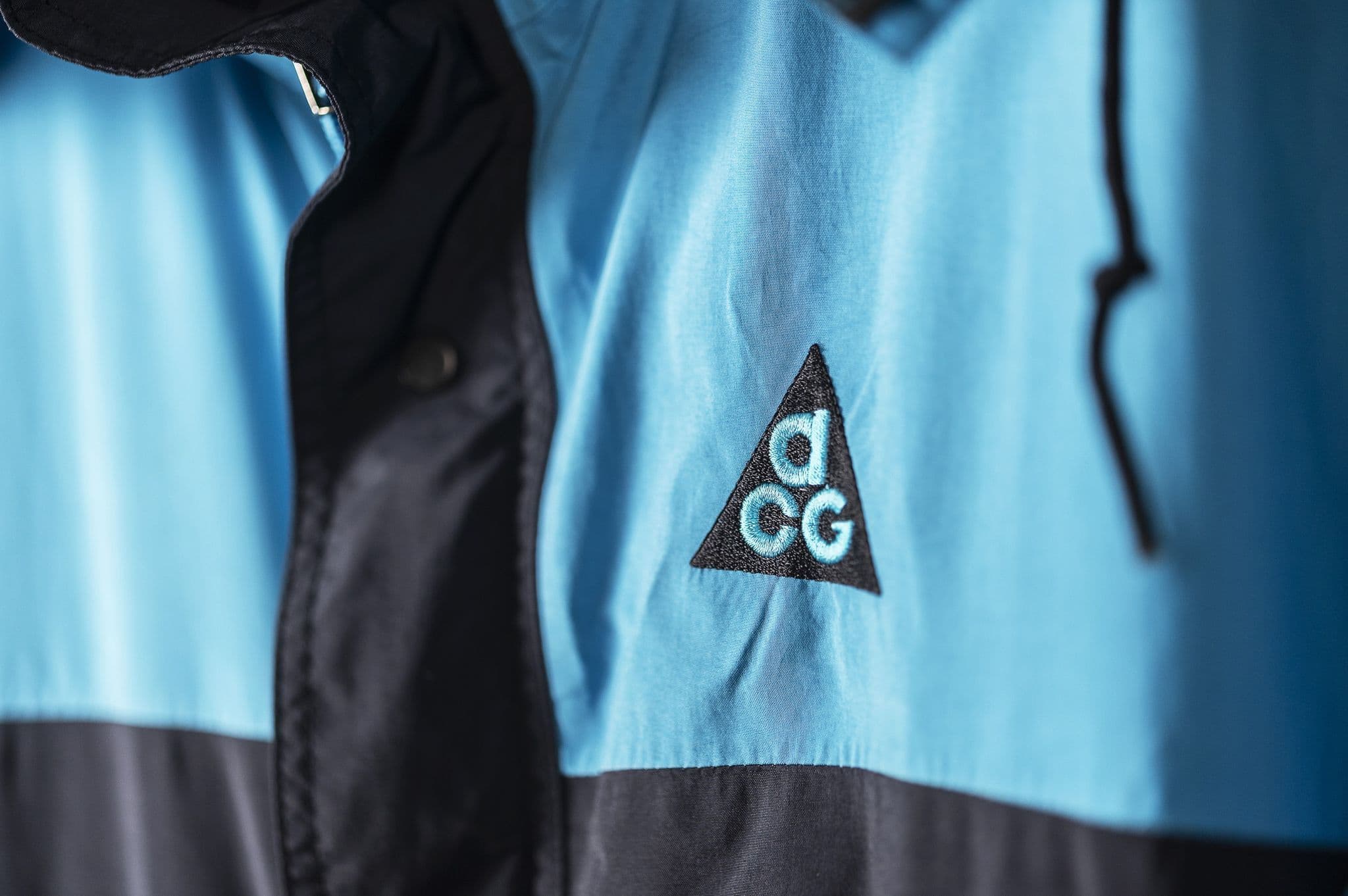
The system has four parts and a sense of humour. The mark is the 1989 triangle, brought back: the shape of a warning sign, with the letters knocked out of it. The colour is a signal orange that runs from screen to steel. The type is a black grotesk whose letters, in the brand’s specimen, turn into engraved natural objects: a rock for the A, a caterpillar for the L, an ammonite for the O.
The voice is Wieden+Kennedy Portland’s, under executive creative directors Caleb Jensen and Blair Warren, written by Alex Maleski and Jacobi Mehringer. Wild Planet, directed by Jackass co-founder Jeff Tremaine, opens as a nature documentary addressed to a viewer on the couch, “bag of chips in one hand, doomscroll machine in the other.” It turns the planet into an amusement park with one rule, “You must be this wild to ride,” and then the narrator gives up on his own film: “I cannot concentrate with this stupid music playing.” It signs off on an orange Swoosh and one word. “Apologies.”
Martin Lotti, Nike’s Chief Design Officer, named the opening the team saw. “With the outdoors in particular, it’s so serious, everything is like top-of-mountain, so we purposely wanted to come in with an attitude that solves problems at the highest level, but has even more attitude.” Inside ACG the same idea has a shorter form, Belchere says: “Serious fun for not-so-serious people.”
It carried a kind of unhinged, expressive attitude that felt like the perfect starting point for an outdoor brand. In a way, that was the hardest part to build, and ACG already had it.
AARON BELCHERE — VP AND CREATIVE DIRECTOR, GLOBAL ACG
How far it carries
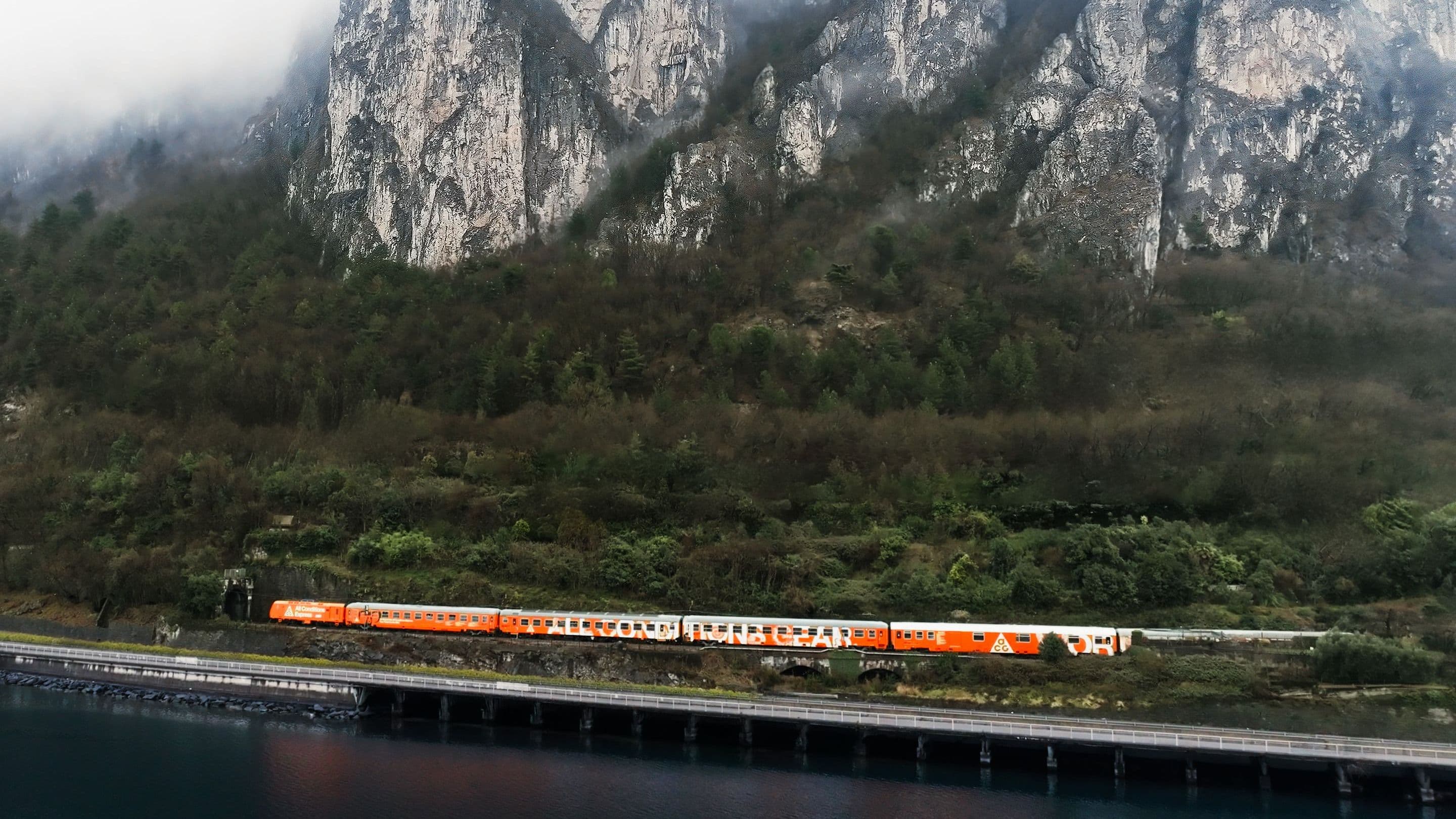
On February 4, Nike sent the identity out on rails. For the opening days of the Milano Cortina Winter Games, an Italian locomotive in ACG orange pulled the All Conditions Express from Milano Centrale to Pian dei Resinelli in the Orobic Alps. Nike’s in-house team designed it, and Dezeen counted the triangle “hundreds of times within the train.” The carriages held a café modelled on a mountain refuge, a recovery car with a wood-burning stove, Hyperice’s Normatec boots finished in ACG orange, and All Conditions Espresso roasted by Five Elephant. A model railway of the route ran beneath an orange shutter. On one shelf, an oscilloscope traced a green Swoosh: the system’s one admission of who was paying for the ride.
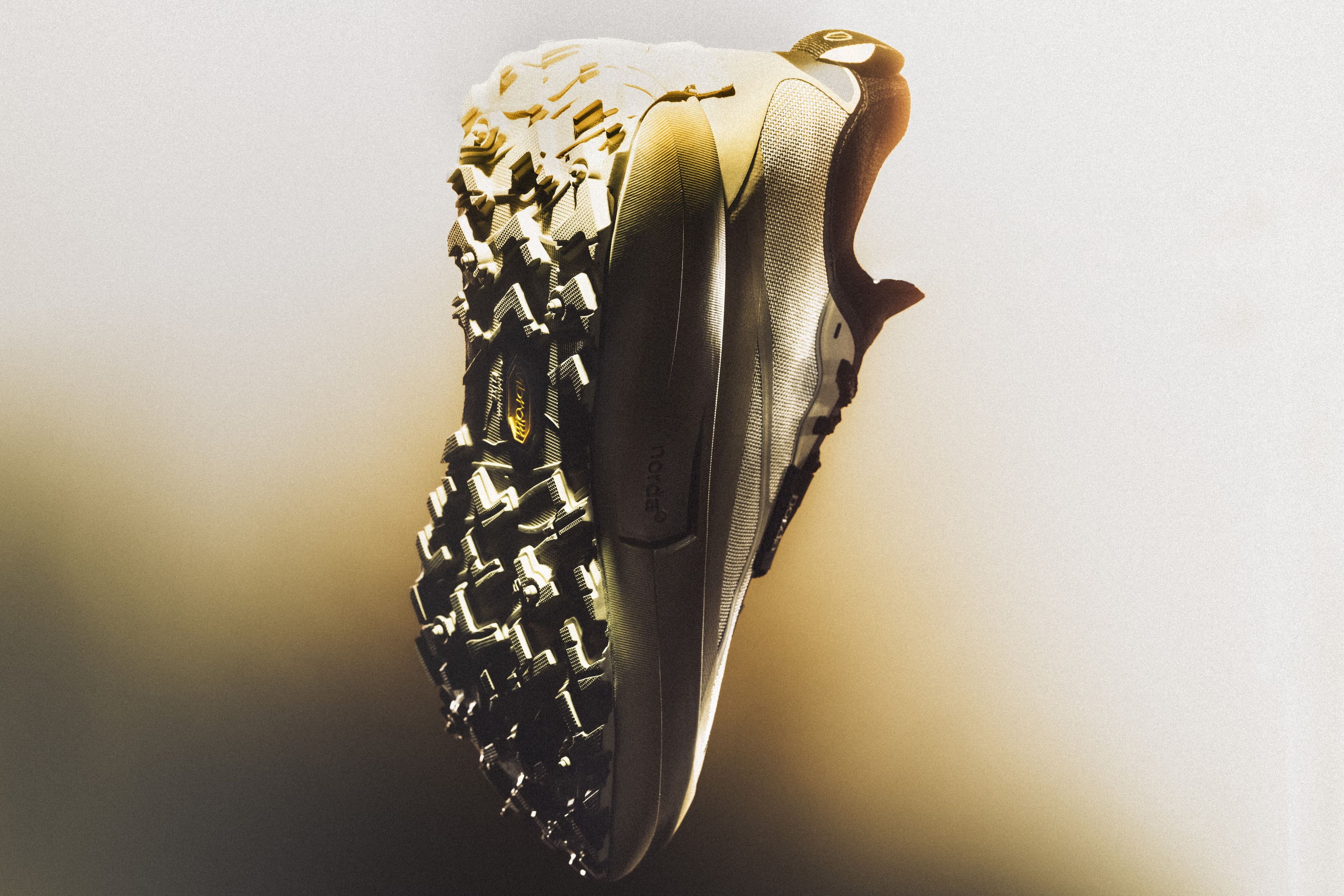
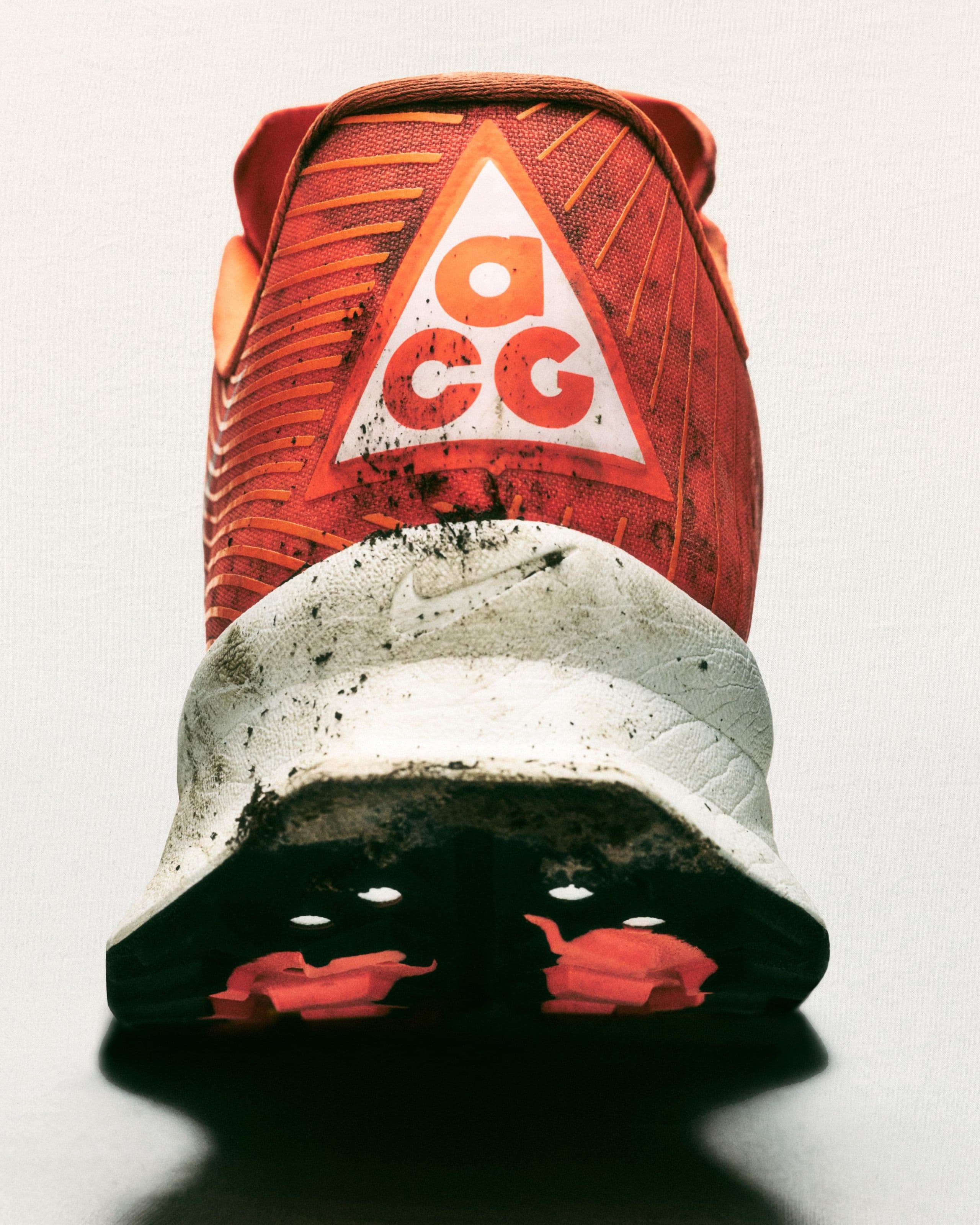
In Beijing, ACG Base Camp opened in Taikoo Li Sanlitun, between faceted orange portals cut like rock. Inside, mannequins leap a boulder beneath wall type that reads, roughly, “put it on and go wild.” The Racing Department, Nike’s trail team renamed, races in the triangle. Team USA’s Milano Cortina collection wore it beside the national crest. R/GA built All Conditions World, a route platform in the same voice, and the triangle sits on the heel of the ACG Ultrafly.
Mark Jones, creative director at Studio Blackburn, made the case in Campaign. “It’s not a logo slapped onto a train in the hopes of grasping some of the hype from the games, but a real-world example of the image the brand has been building consistently across social, retail and physical spaces.”
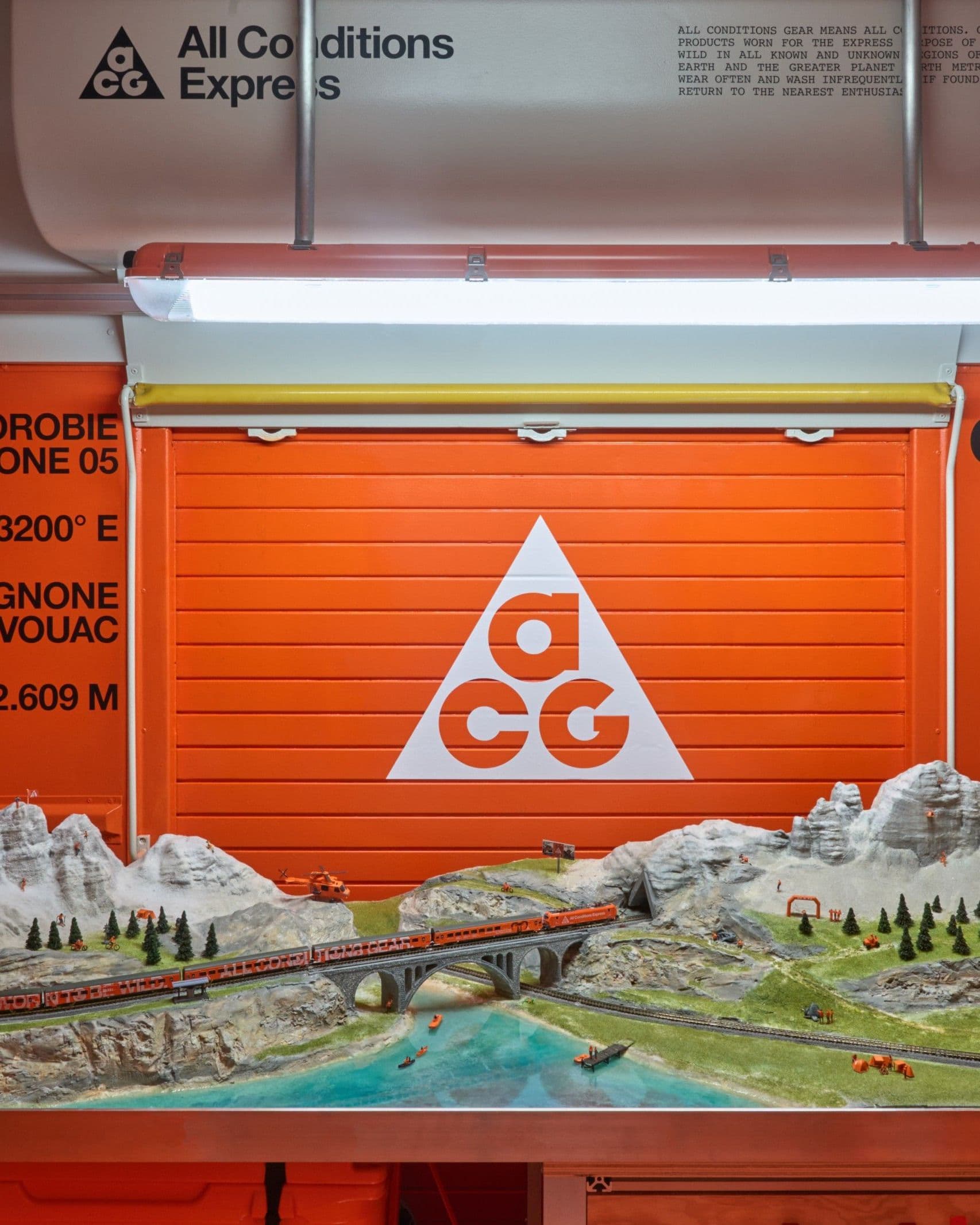
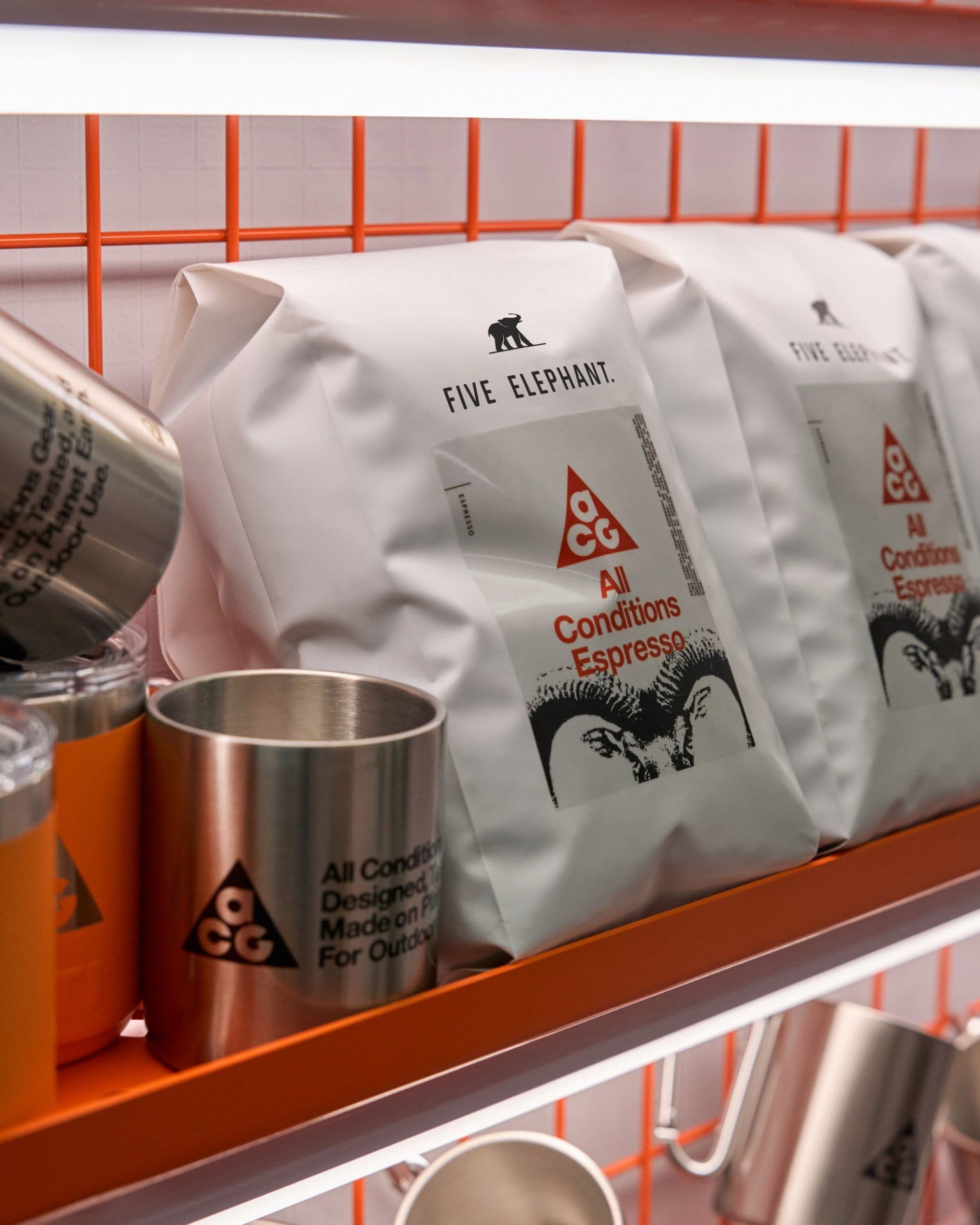
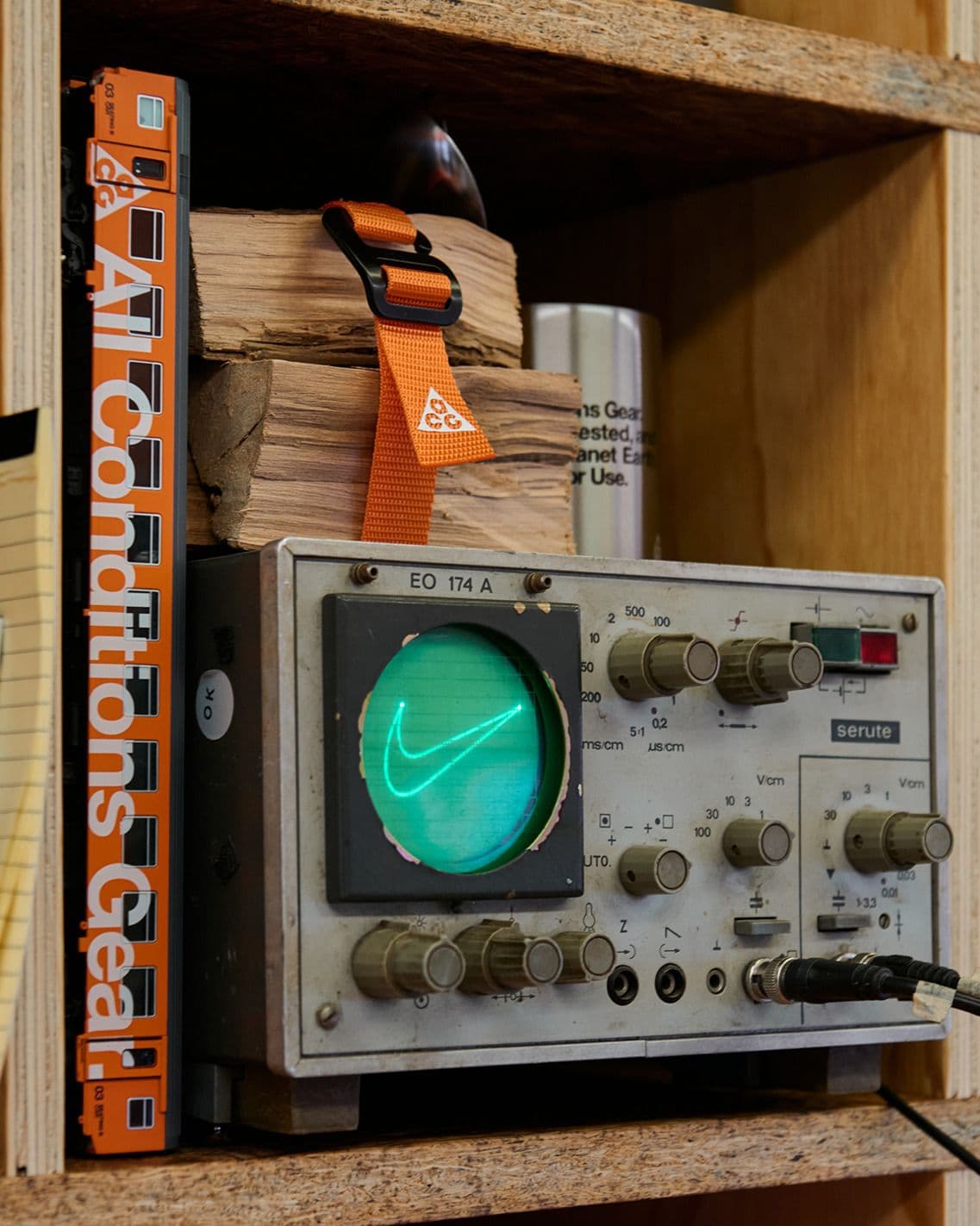
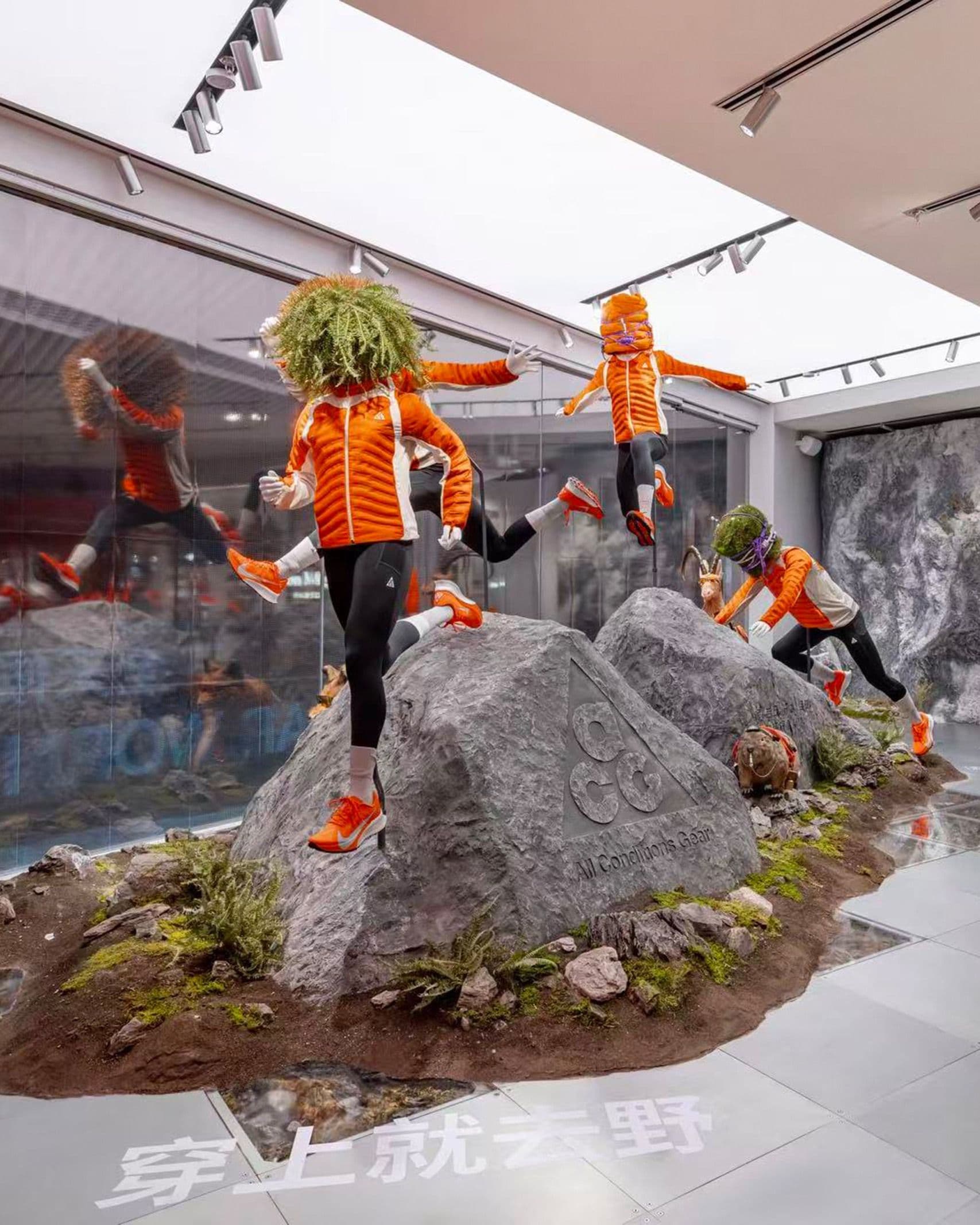
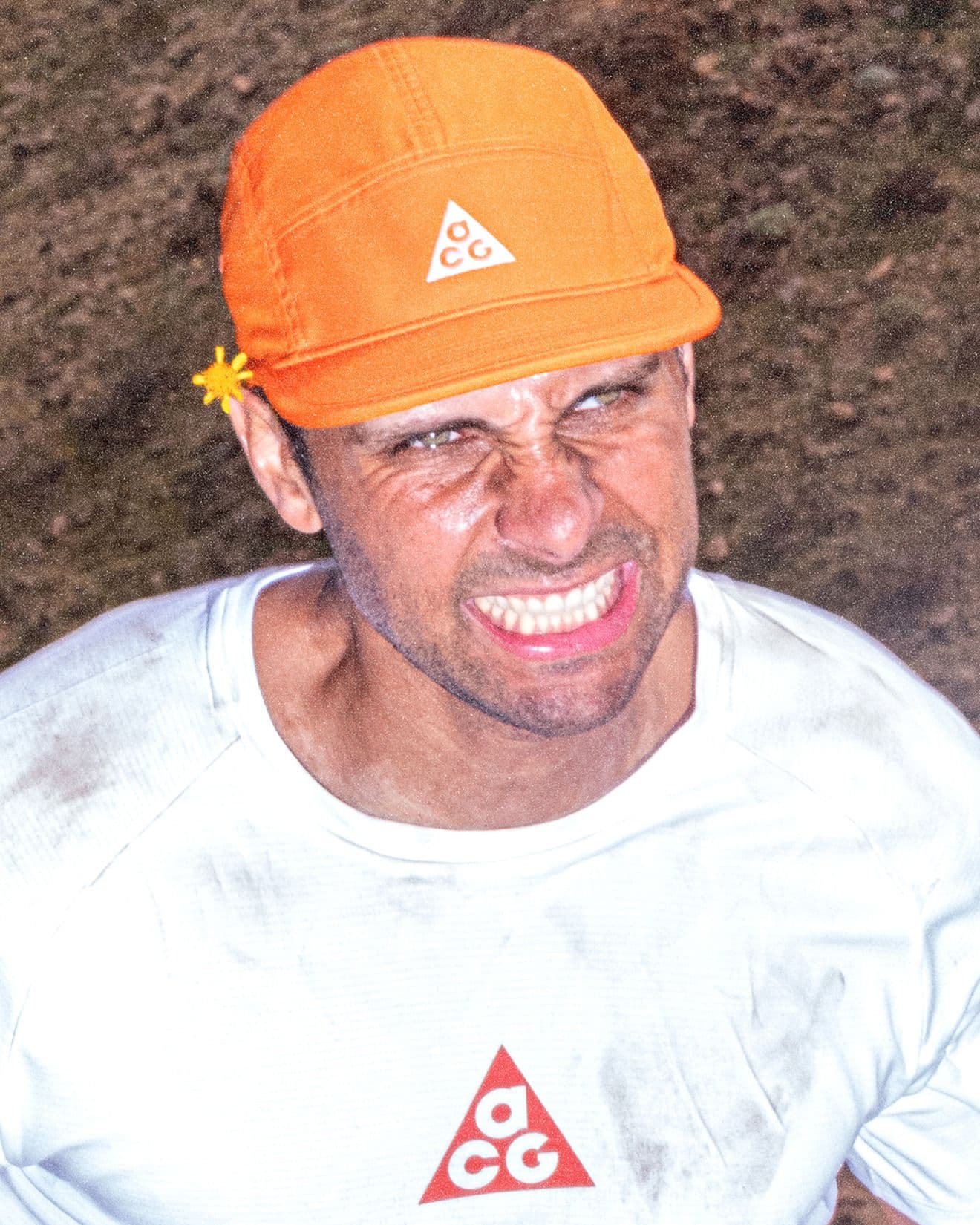
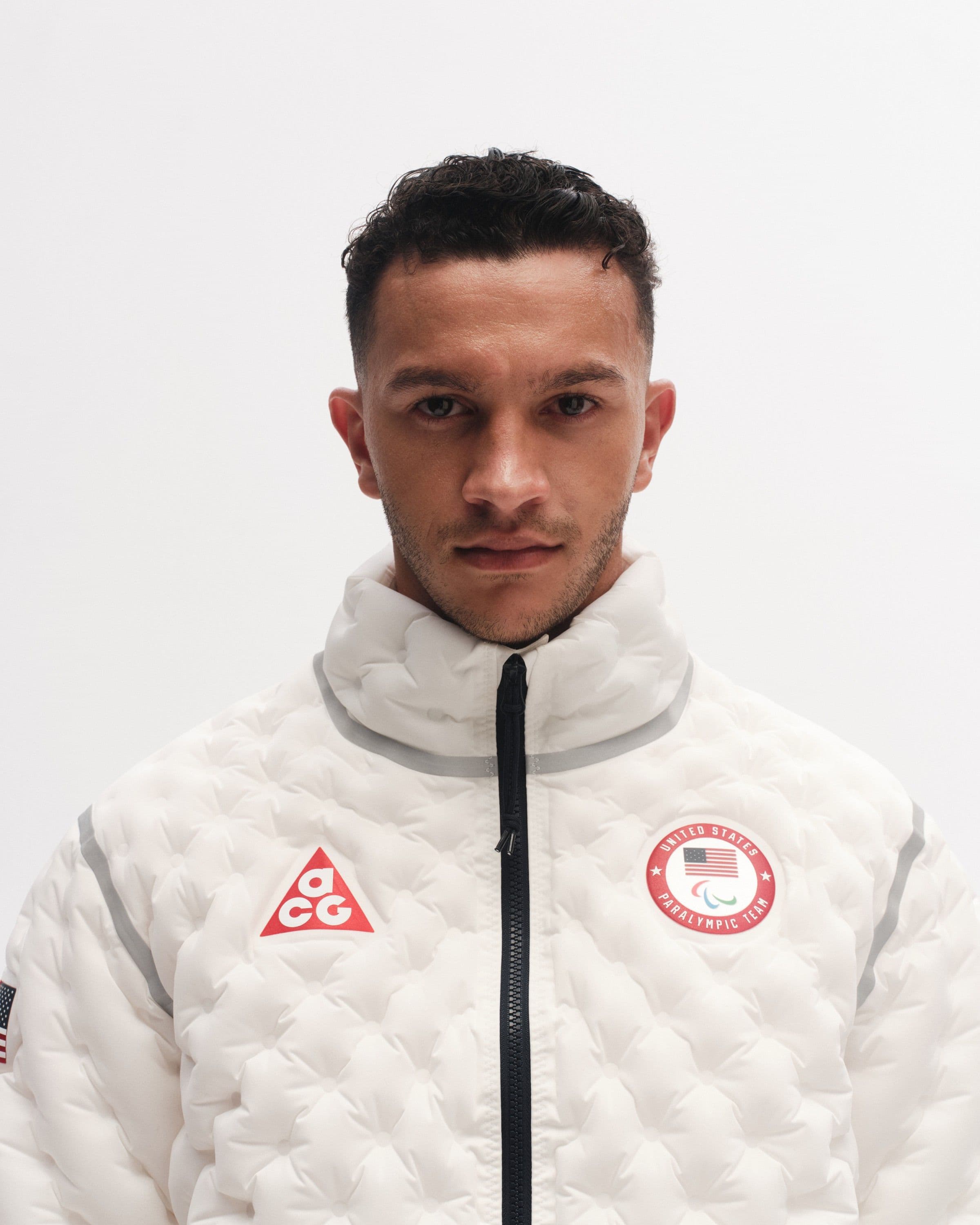
The system, surface by surface: the train’s kit room, its café shelf and its one Swoosh; Base Camp in Beijing; the Racing Department; Team USA; the Ultrafly. Courtesy of Nike; espresso photographed for Dezeen
A brand of its own
ACG has been reinvented before. In 2009 it came back in pop colour; from 2014 to 2018 Errolson Hugh took it all-black and technical under NikeLab. Each time it lived inside Nike’s line. This time the triangle has its own name on the door, its own team and its own store, and the decision to stand apart is what lets the system run from a heel counter to a locomotive without borrowing Nike’s authority along the way.
Belchere describes what that made possible. “What I realized is that ACG is a brand people want to create with. That was new to me.” And: “That’s kind of a nirvana in brand building. You create something that others want to shape and expand.” A coffee roaster, a recovery company, a digital studio and an Olympic team all took the system and extended it, and it came back recognisable each time.
Standard panel judge Scott Mellin put the stakes in a note to the panel: “Nike is the one brand that can move trail running from its historic position as a fringe sport into mainstream acceptance (like the Olympics). And that’s good for every runner and every brand.”
The 1989 brief asked for noticeably different. Thirty-seven years later, ACG answered by painting a train orange.
THE BRAND REPORT
Panel of Judges
 Chris MarshPlanner | MakeThingsExist-egist
 Dan CoeStrategist | Publisher
 Scott MellinFuturist | Board Member
 Laurence StoffelDesigner | CCO & CPO
Credits
- Scott LeClairVP/GM, ACG
- Aaron BelchereVP and Creative Director, Global ACG
- Martin LottiChief Design Officer, Nike
- Wieden+Kennedy PortlandAgency: campaign and brand voice
- Caleb JensenExecutive Creative Director, Wieden+Kennedy Portland
- Blair WarrenExecutive Creative Director, Wieden+Kennedy Portland
- Alex MaleskiCopywriter, Wieden+Kennedy Portland
- Jacobi MehringerCopywriter, Wieden+Kennedy Portland
- Alicia KunaHead of Design, Wieden+Kennedy Portland
- Bruno OppidoDesign Director, Wieden+Kennedy Portland
- Paris Fontes-MichelDesigner, Wieden+Kennedy Portland
- Ridan ArellanoDesigner, Wieden+Kennedy Portland
- Oskar RadonDesigner, Wieden+Kennedy Portland
- Becca TaylorStrategy Director, Wieden+Kennedy Portland
- Aya WatanabeStrategy Director, Wieden+Kennedy Portland
- Jeff TremaineDirector, Wild Planet
- magna studiosProduction company, Wild Planet
- Lost PlanetEditorial, Wild Planet
- Paul RogersEditor, Lost Planet
- Doug YablunEditor, Lost Planet
- Selected WorksPost-production and colour, Wild Planet
- Nielsan BohlColourist, Selected Works
- Field DaySound, Wild Planet
- Noah WoodburnSound design and mix, Field Day
- R/GAAll Conditions World
- Johan JeanssonCreative Director, R/GA