- Brand
- Hoka
- Creator
- Aisha McAdams
- Type
- Film
- Origin
- Independent
- Published
- 2 November 2026
- Score
- 3.45 / 5
The ultrarunning film that lets its champion lose and its photographer finish
HOKA financed it, its agency’s studio produced it and Max Lowe directed it: a 103-minute documentary that set out to film Jim Walmsley’s 2024 attempt at Western States and UTMB in one season, and found its story in Aisha McAdams, the photographer sent to shoot him. Her pictures run through the film, and by its end she has run her first ultra.
Hoka · Aisha McAdams · Film · Independent · 2 November 2026 · Score 3.45
The photographer in the frame
In 2024 Jim Walmsley set out to become the first American man to win Western States and UTMB in the same summer, and a film crew set out with him. Evan Hayes, the producer of Free Solo, wanted an ultrarunning story in feature form and took the idea to Max Lowe, whose first feature, Torn, had put his own family in front of the camera. Lowe wanted a way into the sport he hadn’t seen before, and the first person he thought of was a photographer he had met six or seven years earlier on a three-day running shoot, living in an RV with the runners. Aisha McAdams had run the 1500 metres on a scholarship at Stonehill College, then walked away from racing. By 2024 she was shooting for Nike, HOKA, Salomon and Sports Illustrated, and running again on her own terms.
She didn’t hear the offer as one. Lowe phoned to ask her about trail running, and she sent him to other people. “A couple of weeks later, he texts me and he’s like, hey friend, would you ever wanna talk about your story?” she told the Hurdle podcast. “I wasn’t expecting someone to wanna share my story.” The access to Walmsley turned out thinner than the crew had hoped, Lowe has said, and the film found its centre in the person holding the camera. “No one in their sane mind steps in front of a camera willingly,” he told Spectrum News.
She set terms. The film would go nowhere she wasn’t ready to go, and she worked out with her therapist what she would share and what stayed on the shelf. “I probably wouldn’t have done it if anybody else was directing it,” she said. Lowe had been a subject himself in Torn, and knew, in his words, “the power that can come from being a storyteller who finds themselves in the seat of the central character of their own narrative.”
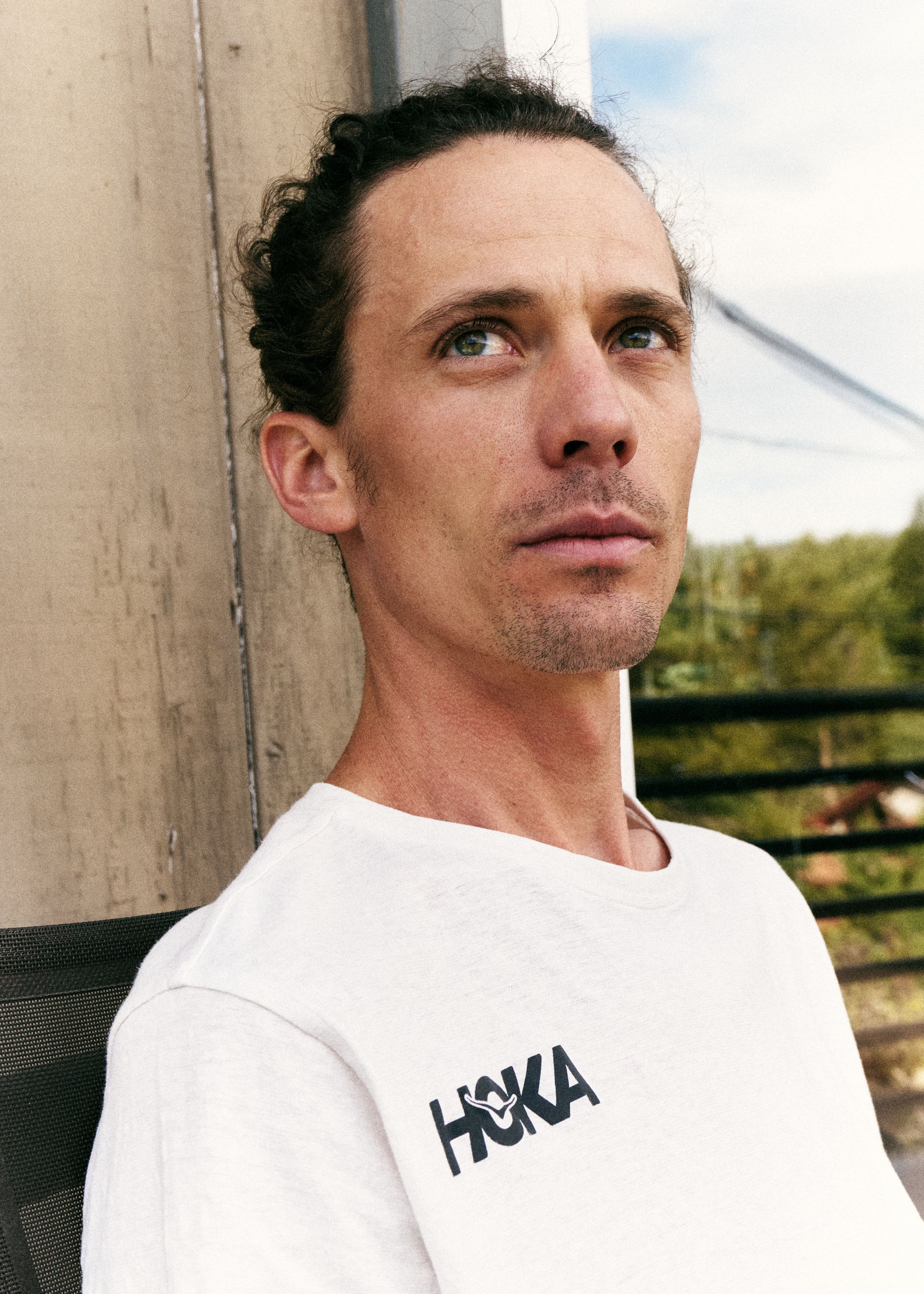
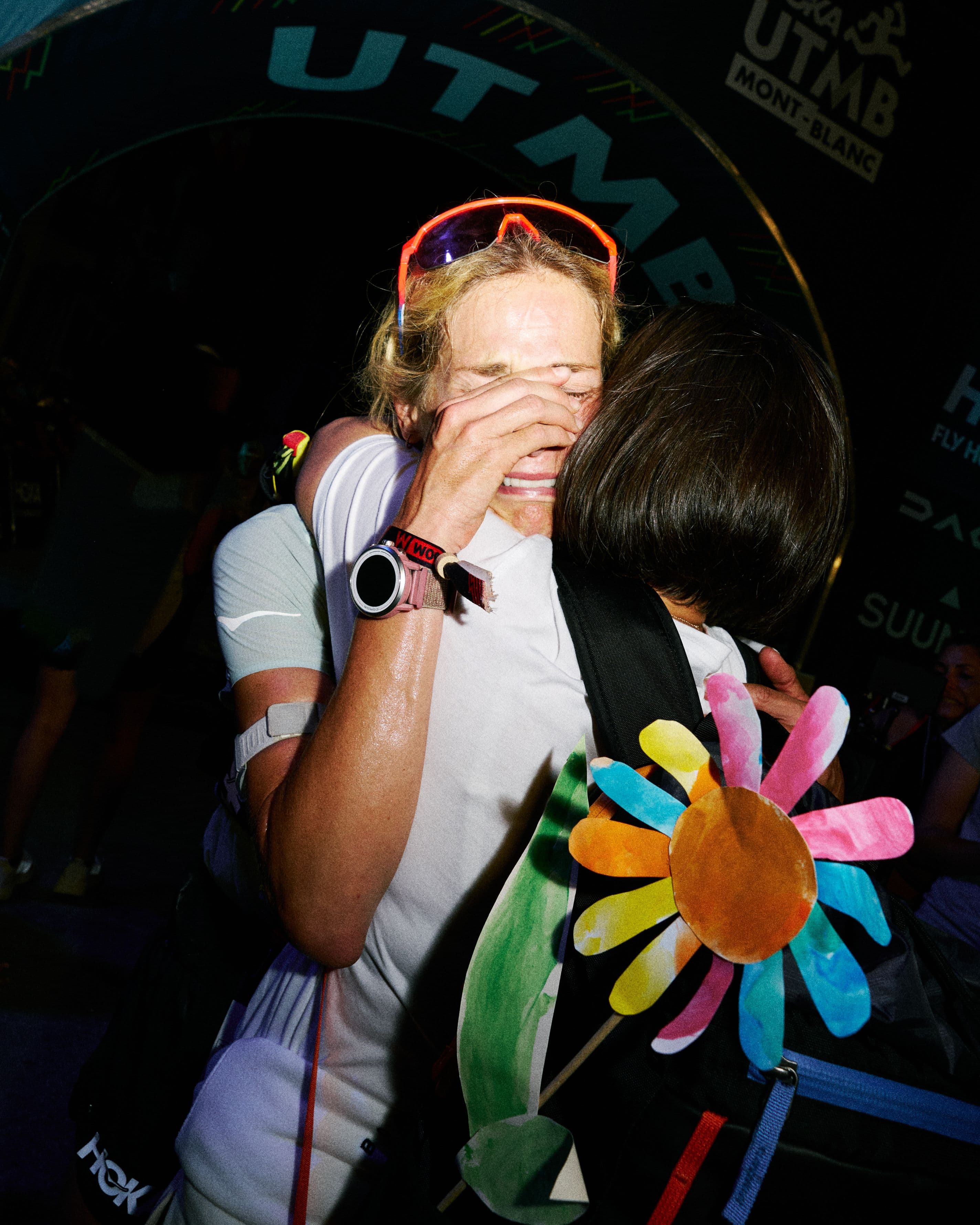
The trailer. Learning to Fly is on Prime Video. Courtesy of Unreasonable Studios
Six cameras on a hundred miles
The races are the film’s set pieces, and they were shot like events. Lowe mapped Western States so that camera teams sat along the course and at the aid stations, “covering not only the running but also like these moments at the aid stations where you’re able to tell that more human story,” he told the Watch or Pass podcast. Pablo Durana ran with a camera; by McAdams’s count he covered a marathon of the course on foot. Race days ran to “upwards of five or six cameras,” and with the archive of her childhood and Walmsley’s career the crew had “hundreds of hours of footage” to cut down to the finished film. Hardrock was filmed too, from her side of the lens, and stayed in. Franck Corbery, on the Standard’s panel, called the race-day production the standout: “Covering Western States and UTMB with that many runners, crews and moving parts is no small thing, and it’s nailed.”
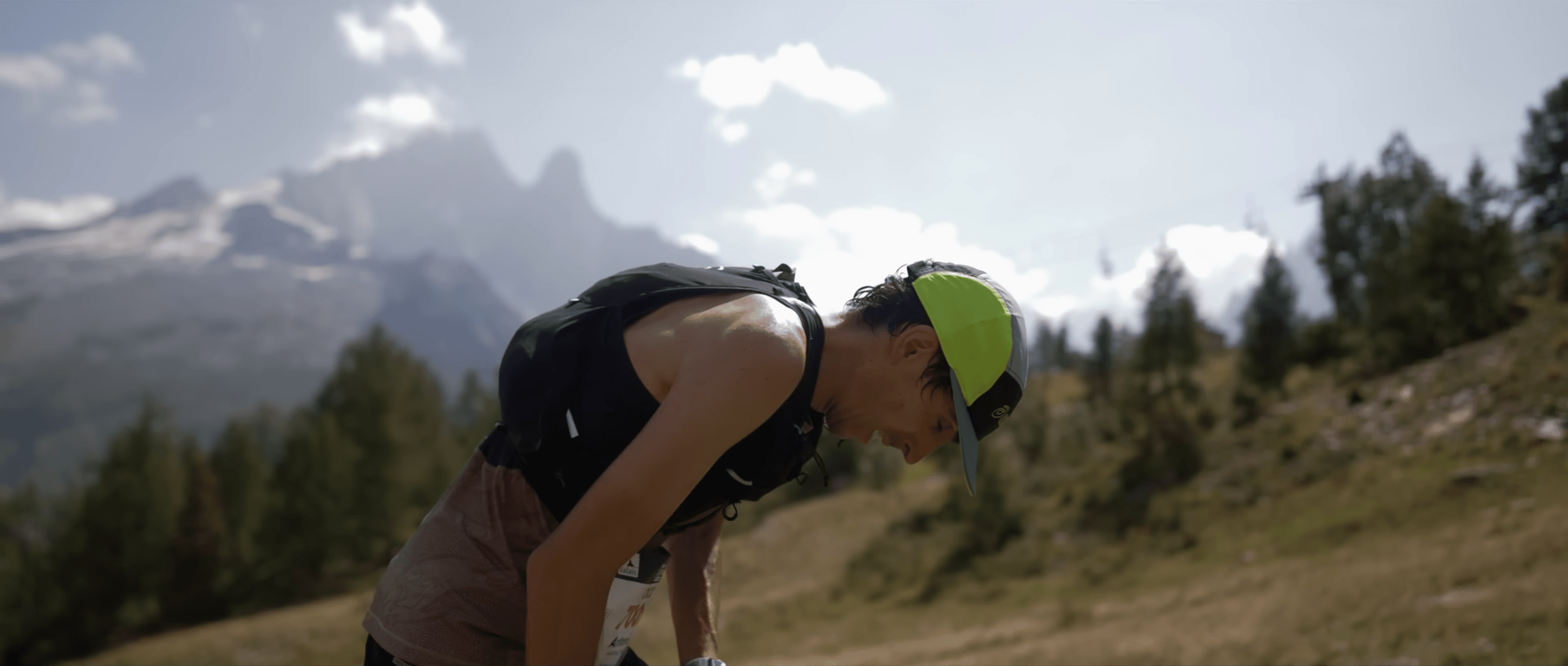
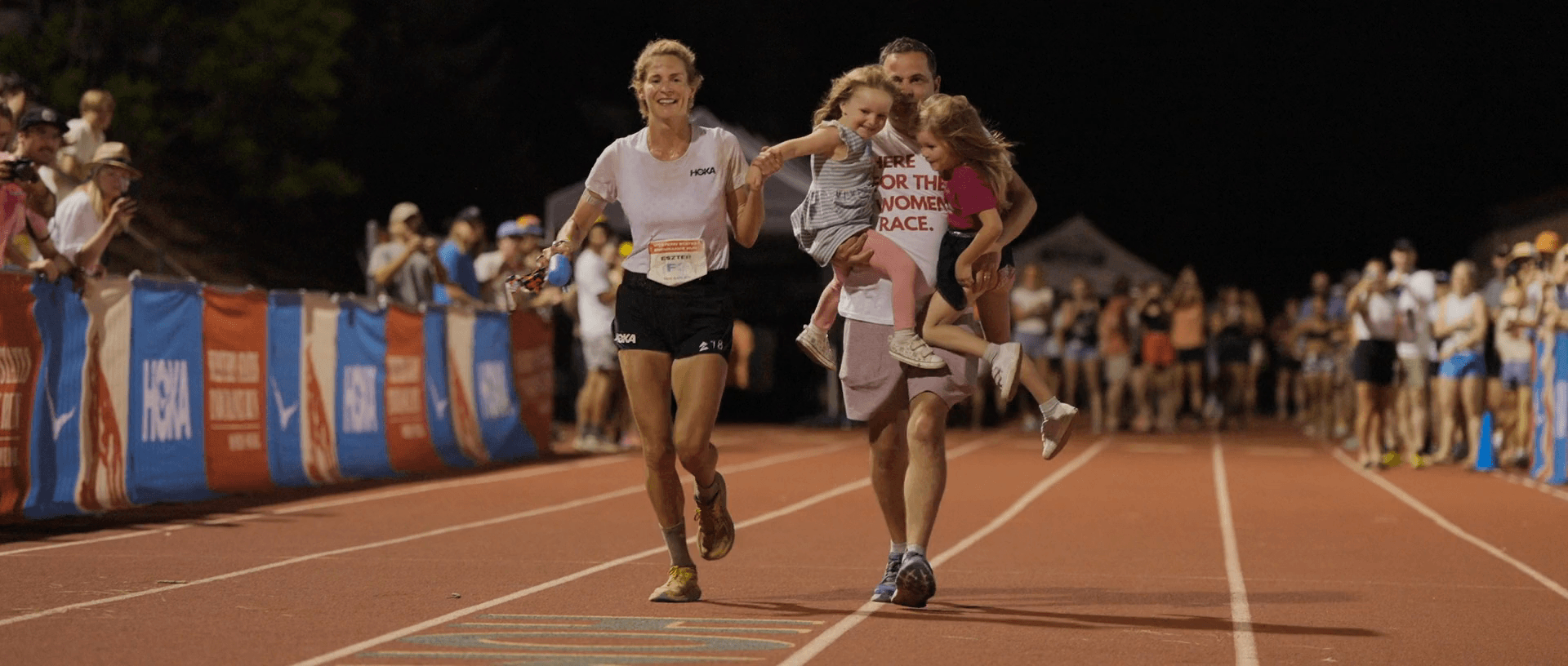
What the cameras caught was a season that refused its script. Walmsley won Western States in 14:13:45, with Rod Farvard second after an all-day duel. Eszter Csillag, an art historian from Hungary who lives in Hong Kong, was third woman and came down the track at night holding her daughters’ hands. Two months later at UTMB, Walmsley led by 35 kilometres, faded through Courmayeur and dropped. The race went to Vincent Bouillard, an unsponsored HOKA engineer the crew “just happen to be there” to film, in Lowe’s words.
Jessica Congdon, who cut Miss Representation and HBO’s Eyes on the Prize, shaped it. Lowe credits her with taking “this rough idea of what the story was going to look like” and polishing it “into the honed, focused piece that the finished product ended up becoming.”
These athletes taught me winning a race is far from the point of running one.
AISHA McADAMS — PHOTOGRAPHER AND SUBJECT, LEARNING TO FLY
The coda
The question the film asks out loud, in her voice, is whether she could endure an ultra herself. The answer is the Javelina Jundred in the Arizona desert on the last weekend of October 2024. She ran the 100K, her first ultra at any distance, in 11:42:09, sixth woman and thirteenth overall. Durana ran beside her with the camera and stopped once to pull cactus spines out of himself. The Wall Street Journal called Learning to Fly “the rare sports movie devoted to failure,” and it is, but the failures belong to the champions. The debut finishes.
What makes the coda land is what the film has told you by then. She was adopted with her sister and moved through five states before Rhode Island. “I didn’t live the most normal childhood, which just meant that what my mom couldn’t control in her life, she decided to control me,” she says in the film. Running was the thing she was allowed out of the house for, and the first thing she was told she was good at. Her high-school coach lived seven houses down the street, drove her to practice, then to appointments, and at 27 became her legal guardian. Then running became the whole of who she was, and she was sick before races. On the podcast she put the shift in one sentence: “I had had running protect me and save me from a lot of things, but then it also became, oh, it’s Aisha the runner.”
The title, Lowe says, is a trail runner’s euphemism: a downhill in flow is the closest most people get to flying. “We’re all trying to get off the ground in some capacity.”
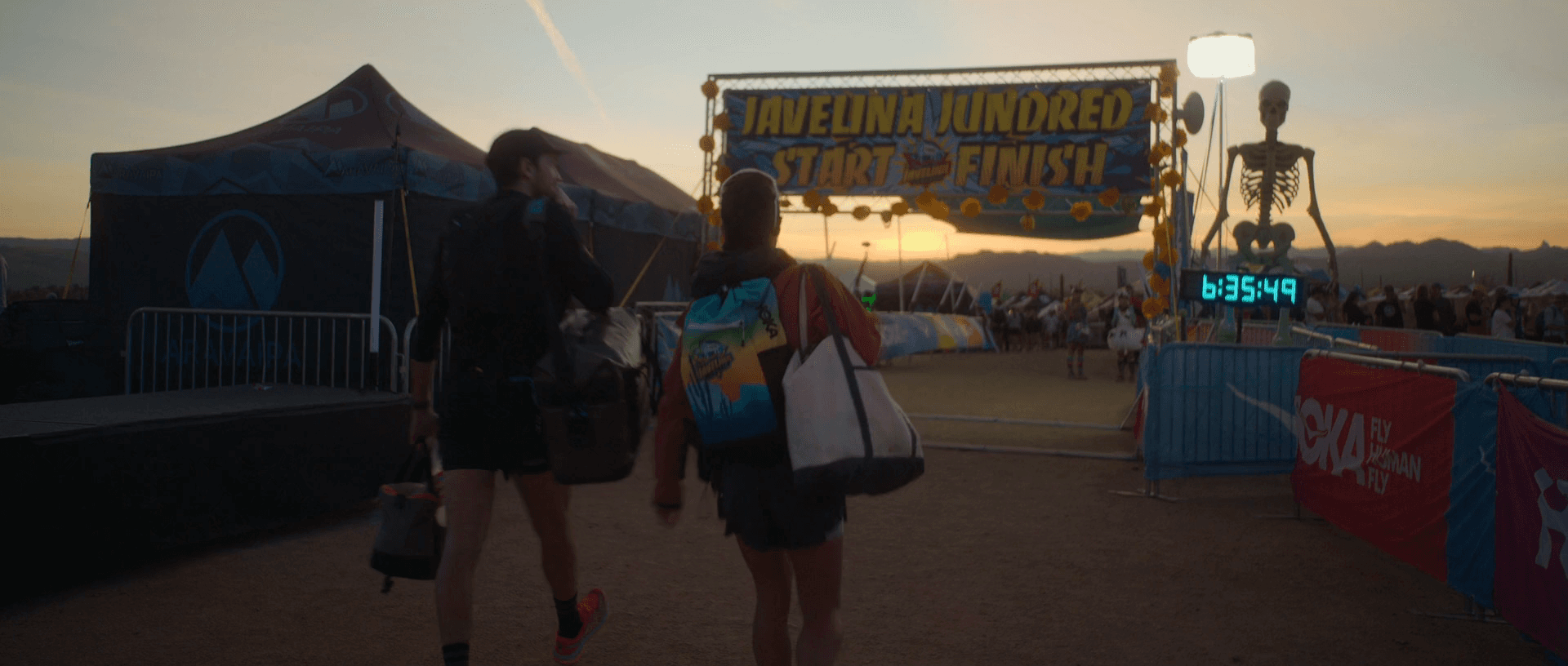
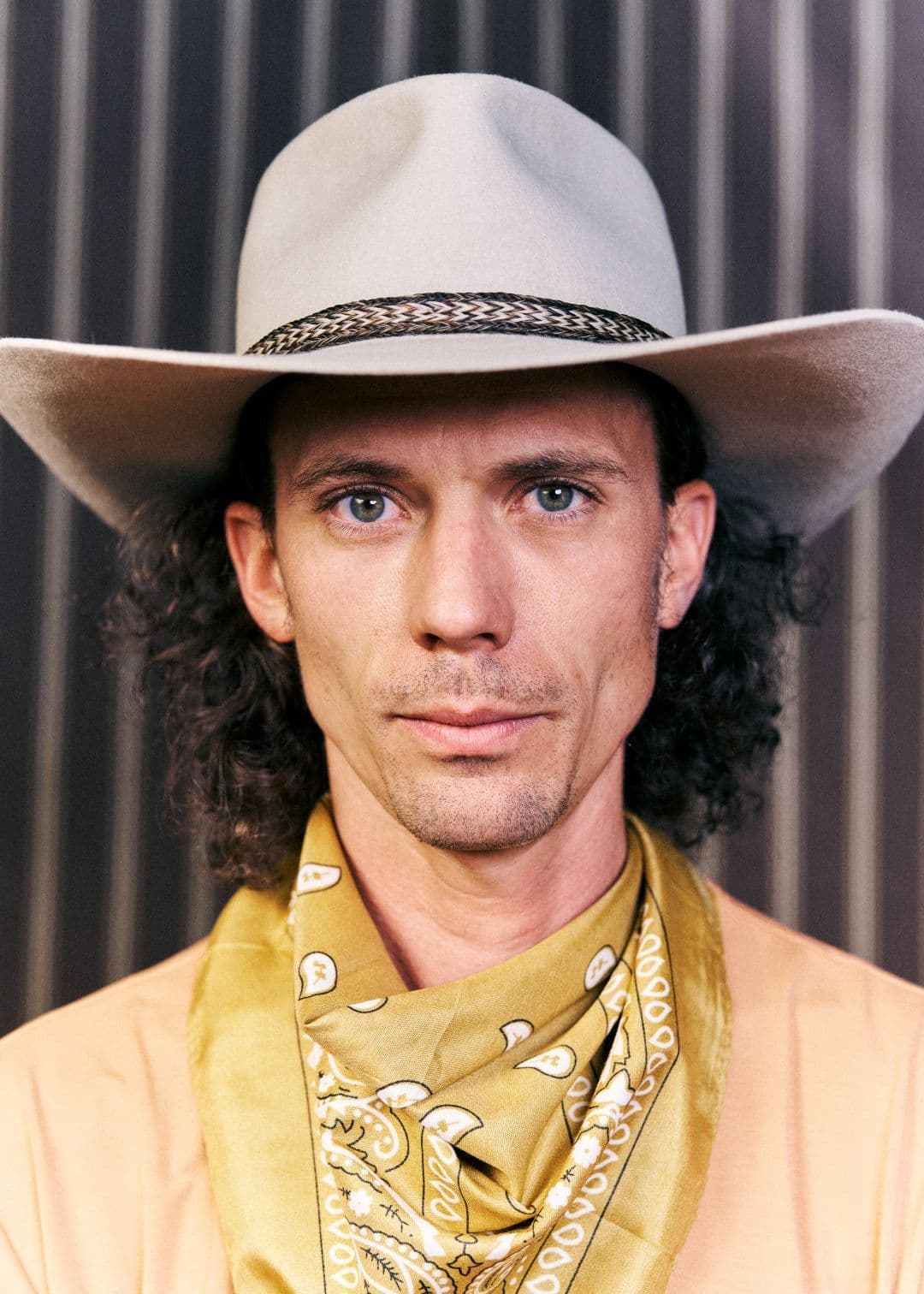
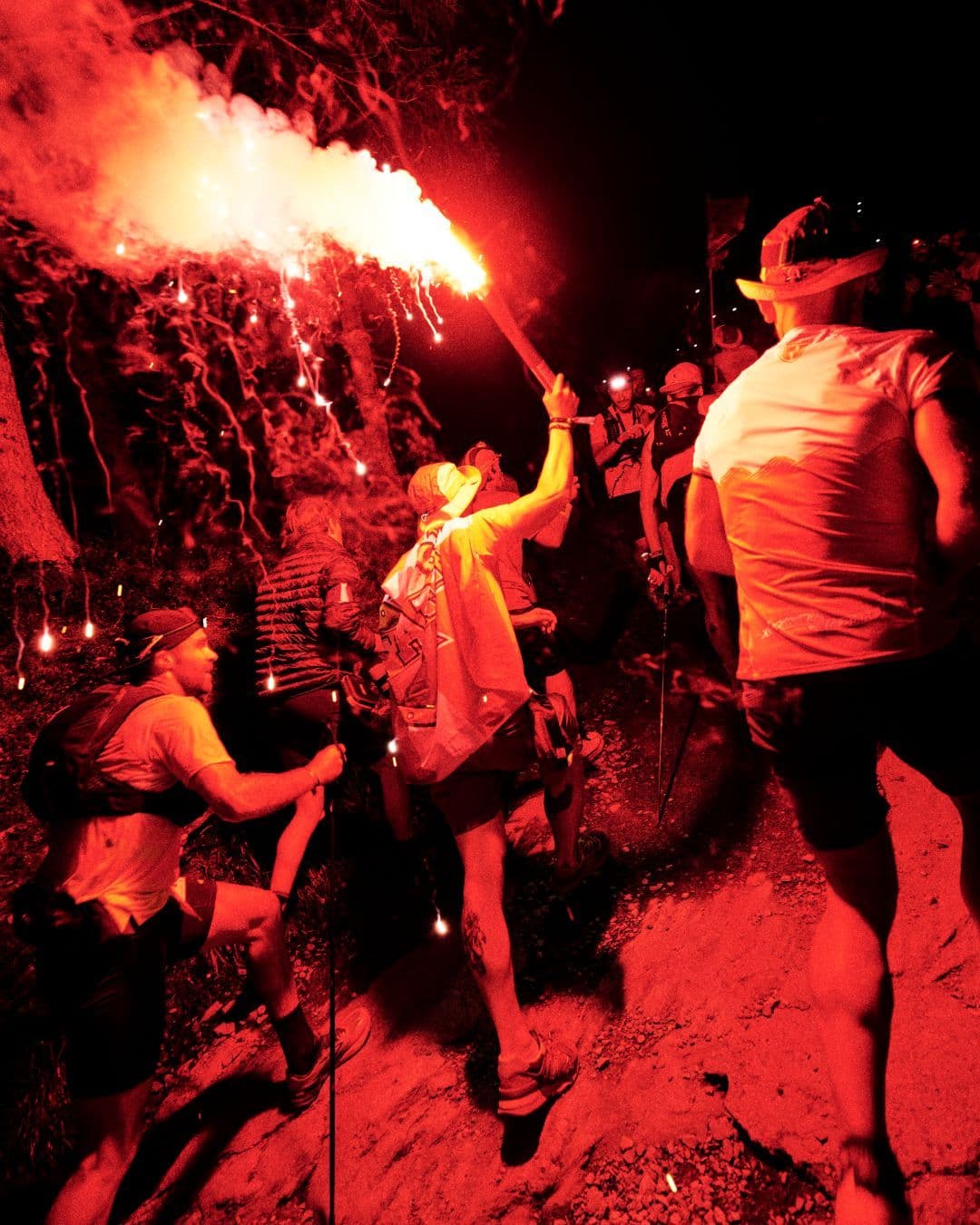
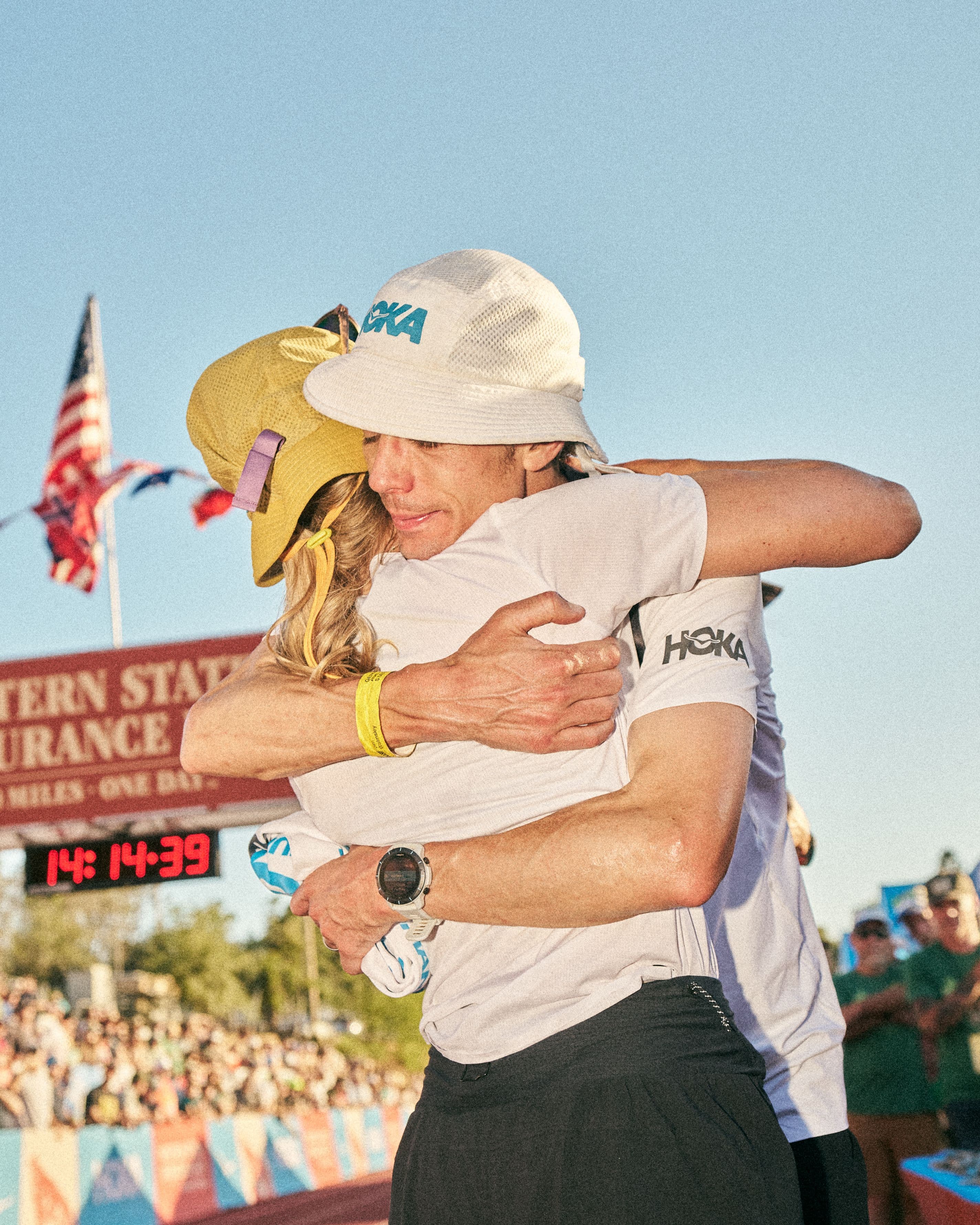
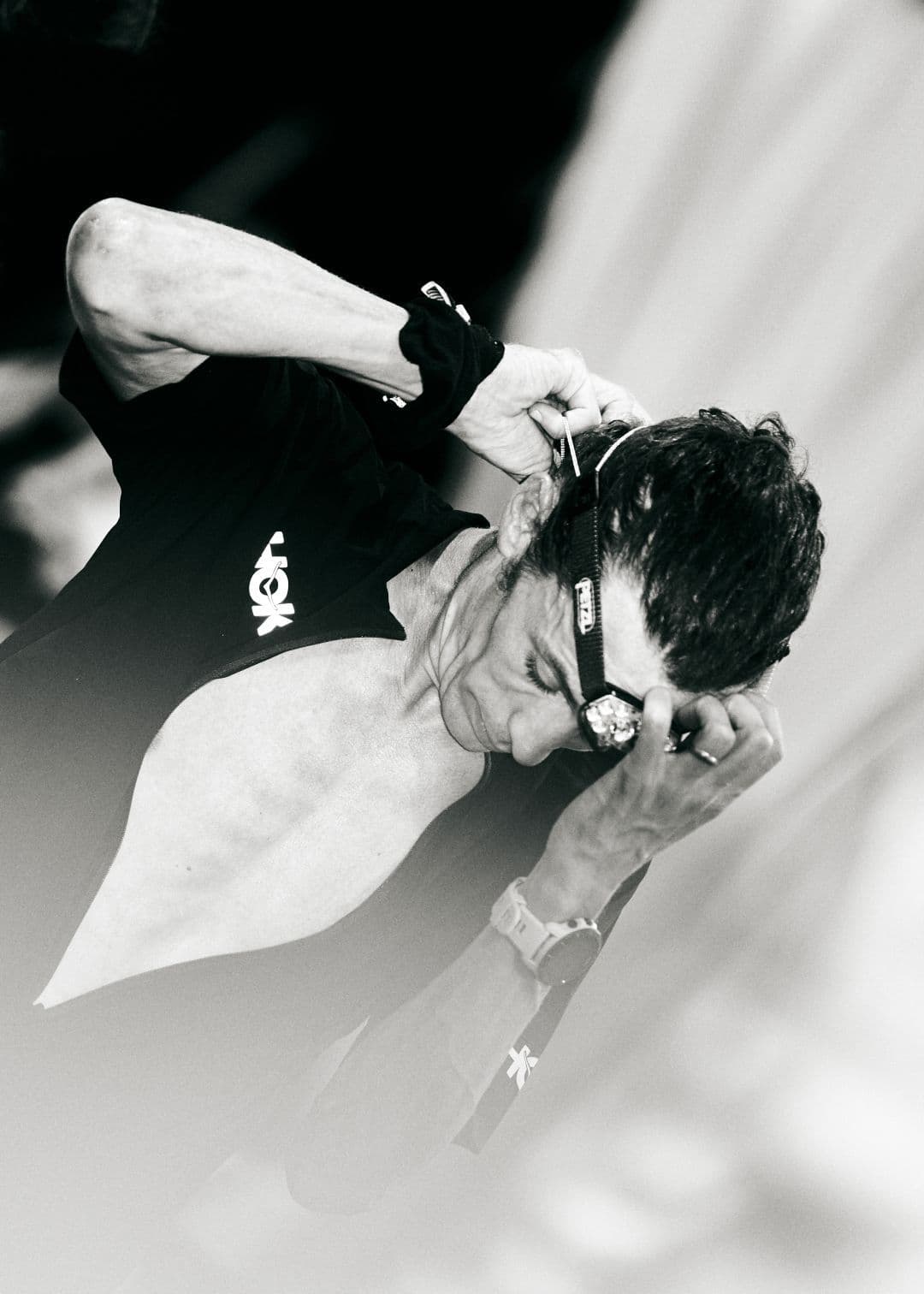
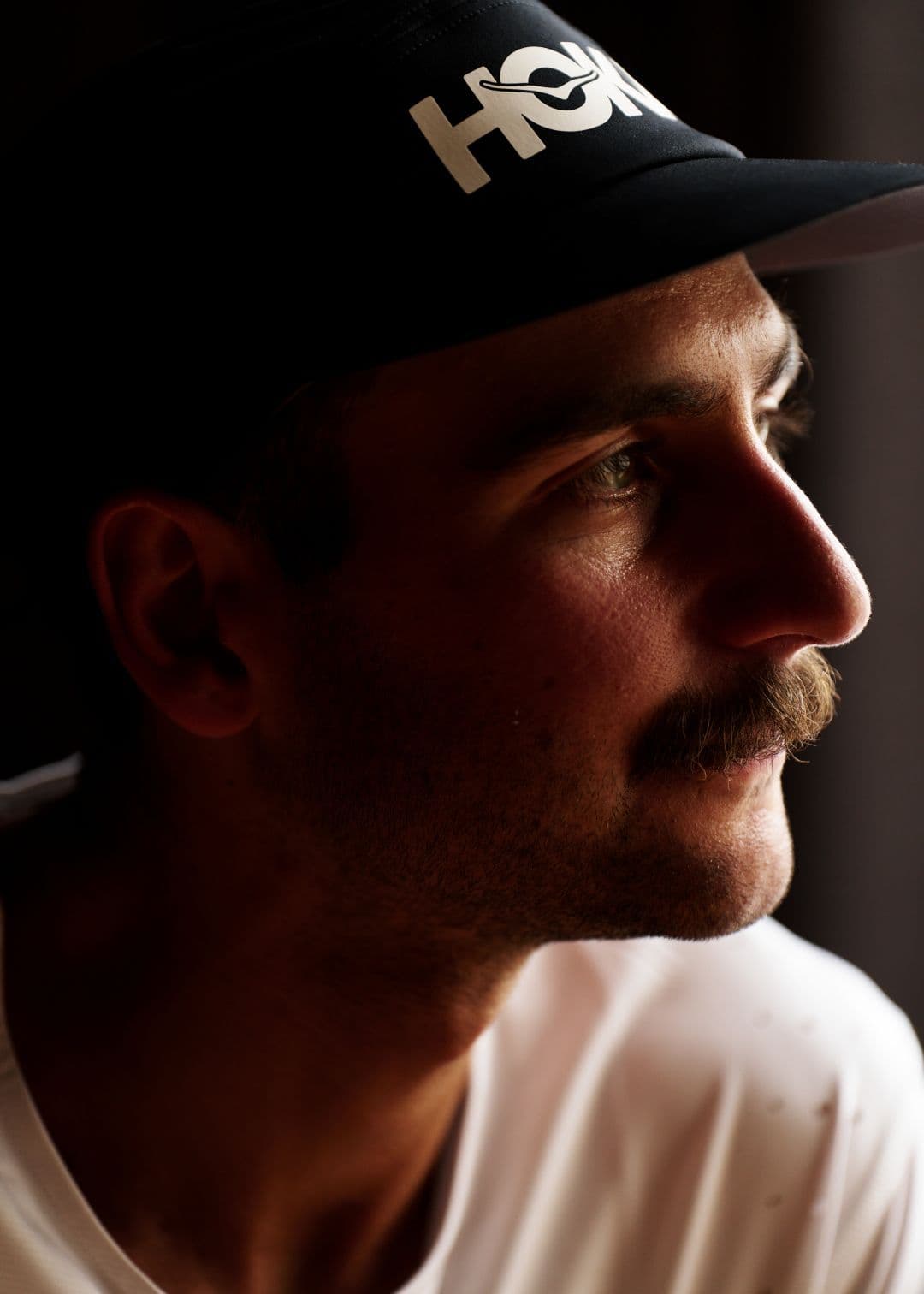
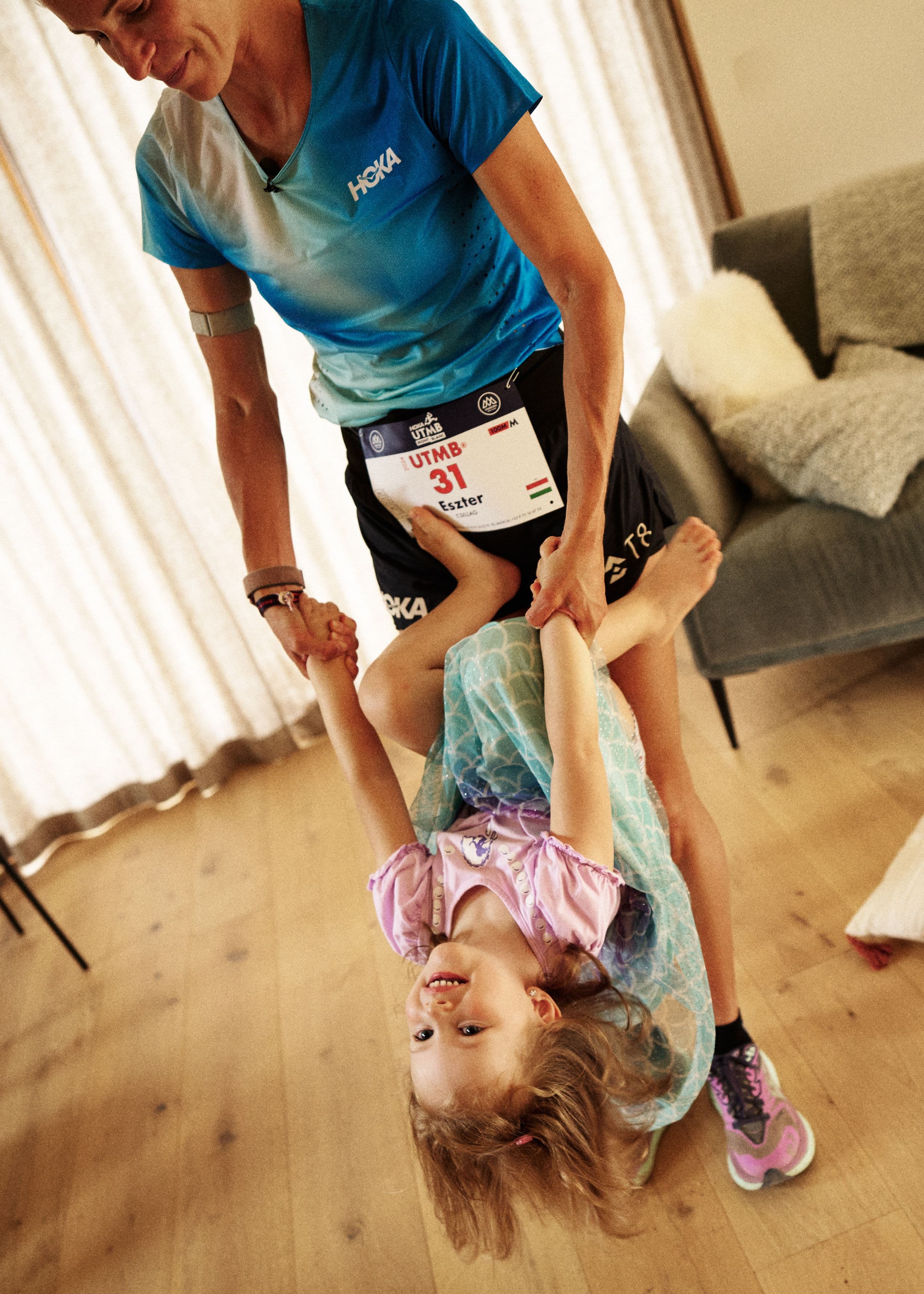
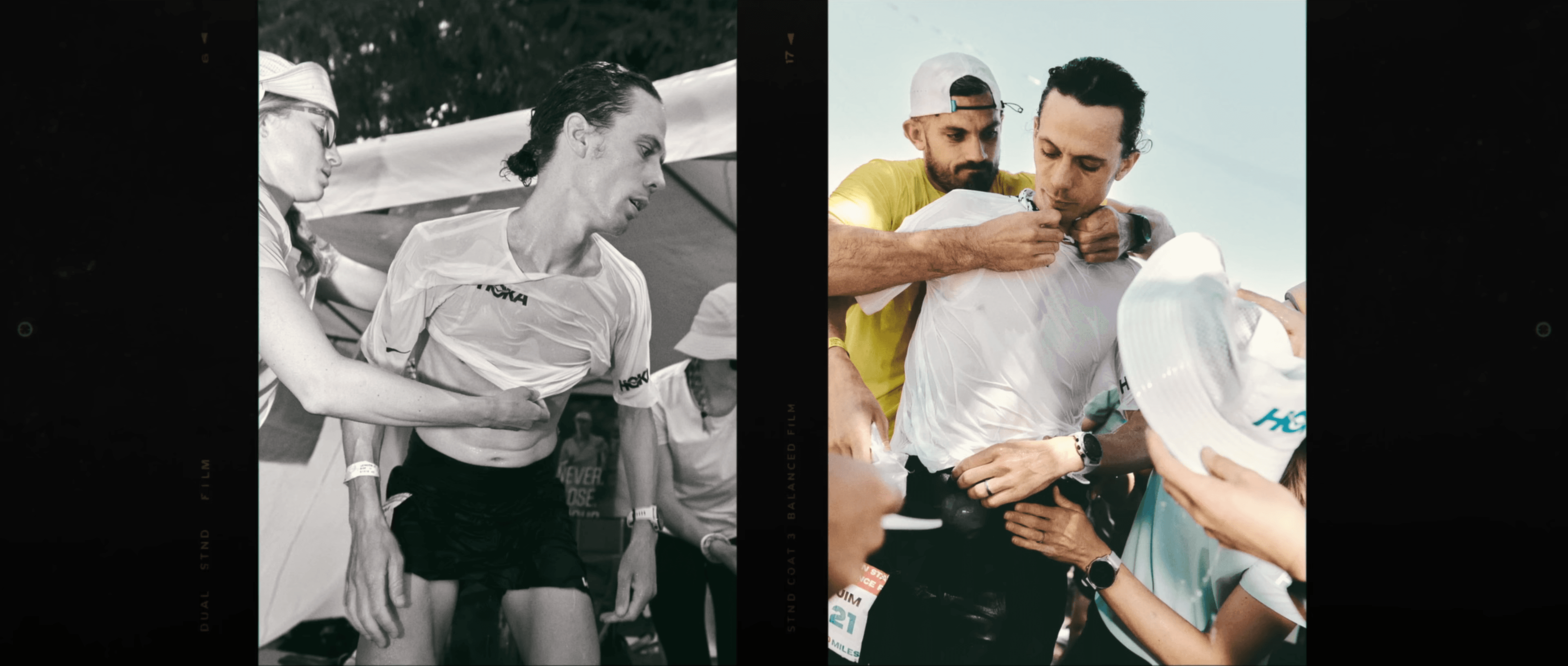
Aisha McAdams’s photographs from the film’s 2024 season, at Western States and UTMB. The film cuts to them in black borders. Photographs by Aisha McAdams, from Learning to Fly
HOKA’s film, outside HOKA’s channels
HOKA paid for it. Stagwell said so in June 2025, when it folded Anomaly’s content arm into a new studio called Unreasonable and listed the slate: Learning to Fly, “financed by Hoka.” Anomaly has been HOKA’s creative agency since Fly Human Fly, and the film is an Anomaly Content & Entertainment production. HOKA’s president, the chief executive of its parent Deckers and its head of global marketing are among the executive producers. Four of the runners wear its shoes, the Western States track is hung with its banners, and UTMB has carried its name since 2024, so when Walmsley dropped, he dropped out of HOKA’s own race.
The brand’s name is nowhere on the poster. The film premiered at Telluride on the festival’s open-air screen, played eighteen American theatres in August 2026 and went to Prime Video in every country it serves on September 24. HOKA’s only public words were a note to the European running press: “we wanted to take the audience beyond race results to tell the story of the determination, vulnerability, and heart required to reach the finish line.”
Corbery saw the trade from the brand’s side: “it gets their storytelling out of their own channels and in front of a much wider audience, with Festivals recognition and now Prime Video and more. More outdoor brands should think this way long term.” The price of that is visible on screen. A brand that wanted an advertisement would have cut UTMB. It stayed in, and the film is a film because of it. The following June, HOKA brought McAdams back to Western States to photograph its athletes.
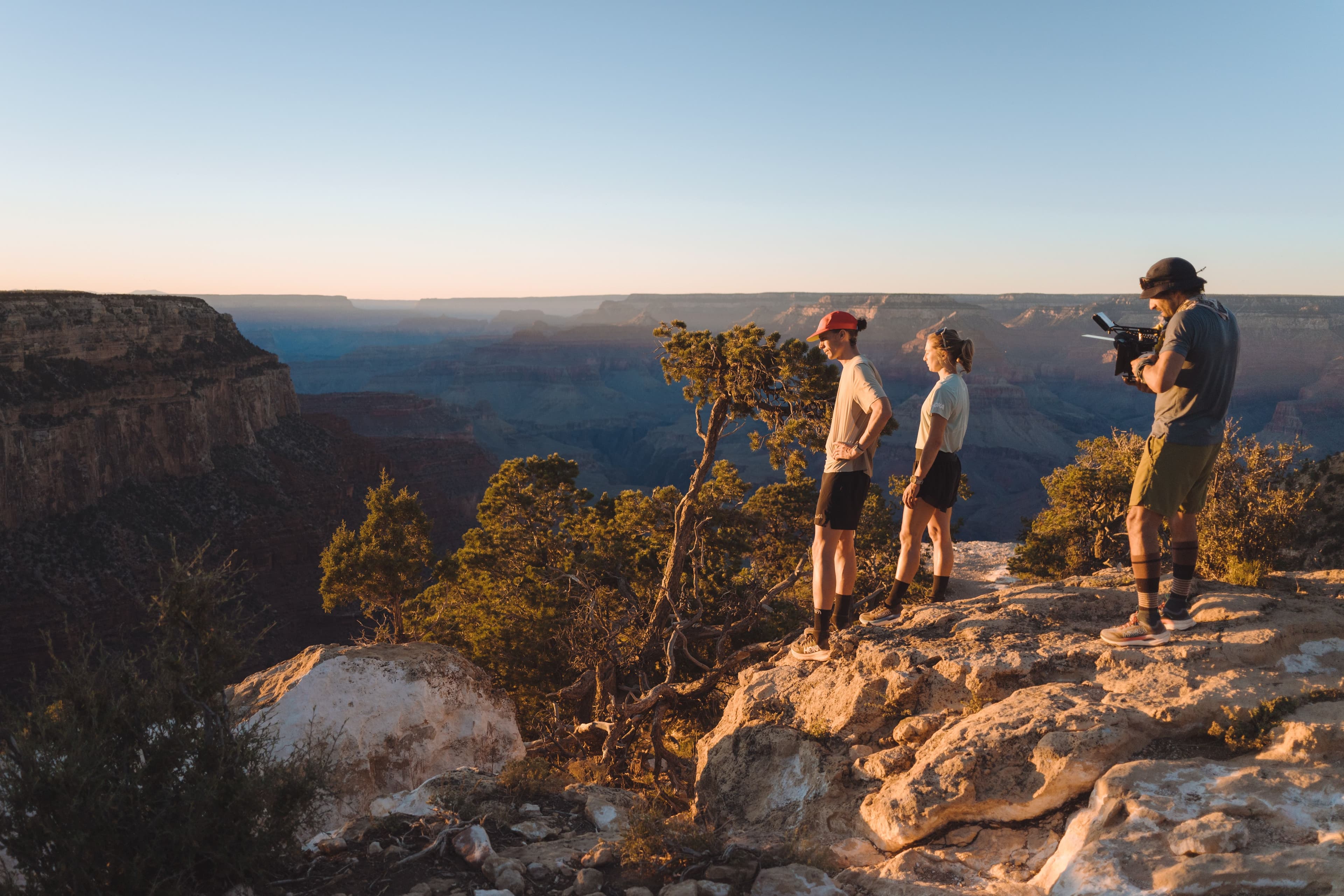
Its champion drops out of the brand’s own race, and the film gives the finish to the photographer.
THE BRAND REPORT
Panel of Judges
 Matt TrappeCreative Director
 Scott MellinFuturist | Board Member
 Franck CorberyExecutive Producer⎪Craft Lover
 Dan CoeStrategist | Publisher
Credits
- Max LoweDirector and executive producer
- Aisha McAdamsPhotographer and subject
- Jim WalmsleyUltrarunner, HOKA
- Eszter CsillagUltrarunner, HOKA
- Rod FarvardUltrarunner, HOKA
- Vincent BouillardUltrarunner; 2024 UTMB champion
- Evan HayesProducer; Chief Content Officer, Unreasonable Studios
- Katy ChevignyProducer; co-founder, Big Mouth Productions
- Ayesha RokadiaProducer
- Jessica CongdonEditor
- Jenni MorelloDirector of photography
- Pablo DuranaAdditional cinematography and drone operator
- Tyler StricklandComposer
- Meredith McBeeMusic supervisor
- Justin BarocasExecutive producer; CEO, Unreasonable Studios
- Ben GraysonExecutive producer; co-founder, Wild State
- Kevin JosephExecutive producer, Wild State
- Andy MiningerExecutive producer, Wild State
- Chad MooreExecutive producer
- Erika GabrielliExecutive producer; VP Global Marketing, HOKA
- Robin GreenExecutive producer; President, HOKA
- Stefano CarotiExecutive producer; CEO, Deckers Brands
- Unreasonable StudiosPresenter and distributor
- Anomaly Content & EntertainmentProduction company
- Big Mouth ProductionsProduction company, in association
- Wild StateProduction company, in association