- Brand
- Rapha
- Type
- Film
- Origin
- Independent
- Published
- 23 November 2026
- Score
- 3.72 / 5
A love story to the man who won 525 races
Eddy Merckx, by the account of the film’s director, will never tell you how good he was. So 6 Day Films had Axel and Sabrina Merckx ask the questions, and persuaded their mother to sit for her first interview in 35 years. Rapha presents the result: 91 minutes, started on money raised from cyclists.
Rapha · Film · Independent · 23 November 2026 · Score 3.72
A message on LinkedIn
Lee Donaldson had been directing for thirty years when he read an article about Eddy Merckx in lockdown. “I just thought, why has no one made a decent film about Eddy since La Course en tête or Sunday in Hell in 76?” he told the Cyclist Magazine Podcast. He tried the front door and found, in his words, a bit of a wall. So he wrote to Merckx’s son instead. “I contacted him the day after he’d said to somebody, why doesn’t somebody make a film about my dad?” The approach went through LinkedIn. “I mean, that’s shameless, isn’t it?”
Axel Merckx answered straight away, and Donaldson says the film would not have happened without him. He brought in Simon Hardy, a creative director he had made commercials with for years, on the strength of one qualification: “he knows nothing about cycling, which is great because we wanted the film to have a perspective. We wanted to cross over like Senna did.” The two founded 6 Day Films in London in March 2022.
The man himself took longer. On his eightieth birthday, in June 2025, Merckx announced the film in his own words: “a very personal documentary. In it, I open up in ways I never have before.”
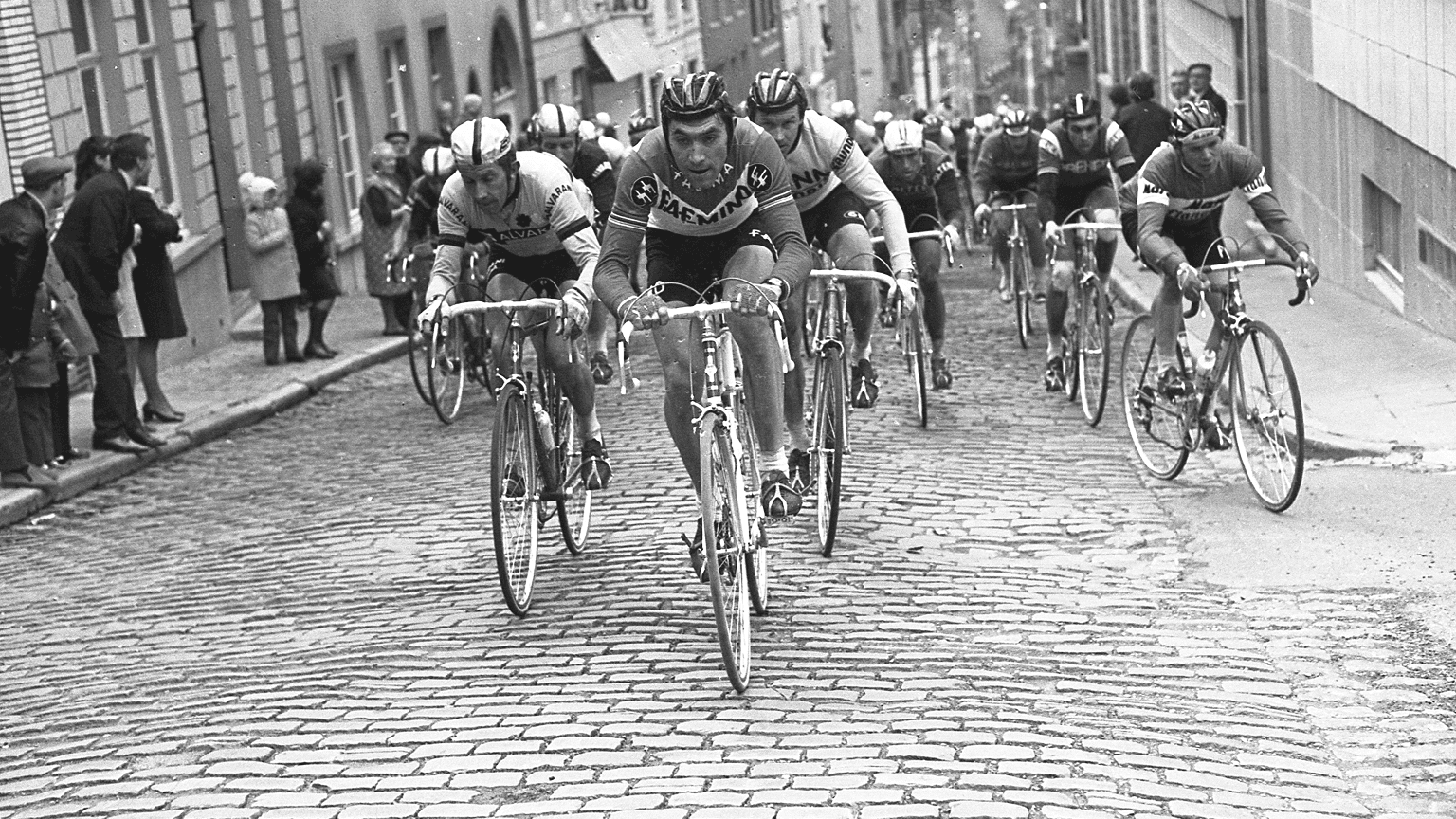
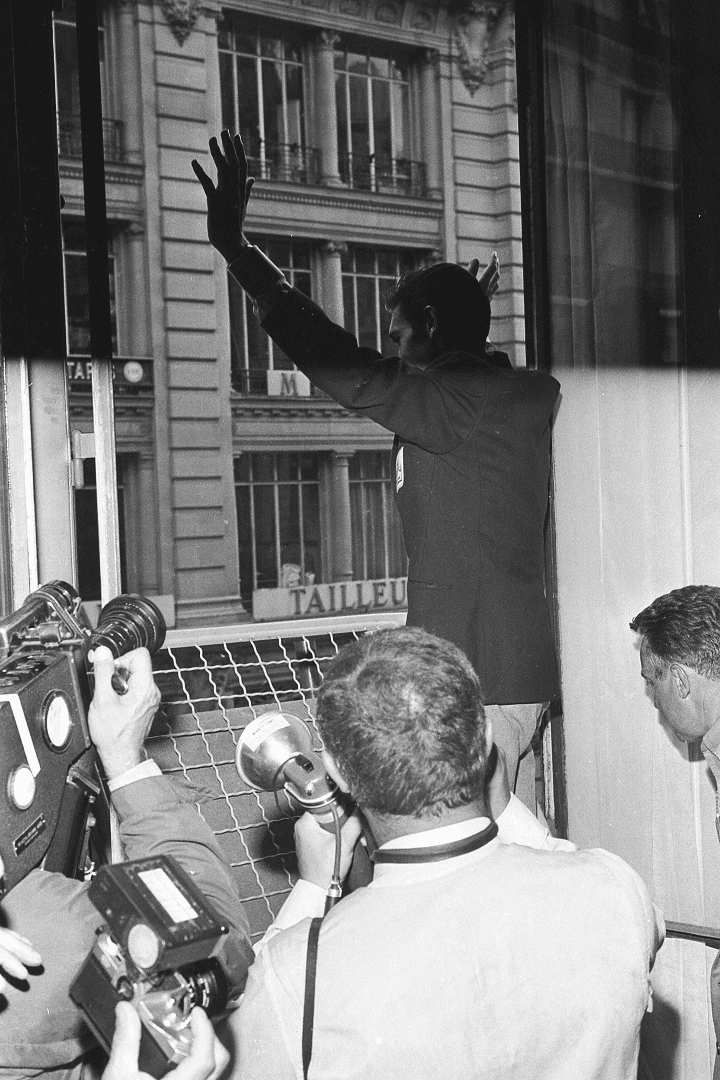
The family asks the questions
Most Merckx interviews have the same problem. “Eddy will never tell you how good he is,” Donaldson says. “He won’t.” His answer was to change who was asking. He put it to Merckx on set: “How many times have you been interviewed?” Merckx didn’t know; maybe three or four thousand. “Have you ever been interviewed by your children?” Merckx smiled and said no. “Axel and Sabrina are going to interview you because I feel that we’ll get further to the truth that way.” They did it twice over, in French and in Dutch, and Donaldson believes the family got to harder questions than he would have been allowed.
Claudine Merckx was the last yes. She had not given an interview in 35 years, by Donaldson’s count, and she had turned down her husband’s director, her children and her grandchildren. Donaldson asked again when he was returning some of Eddy’s old race jerseys the crew had borrowed to film. He told her how it would look: her son in it, her daughter in it, Eddy in it, the soigneur in it, and not her. People would think something was up. She thought about it and said, as he tells it, “okay, I do it.” Sabrina asked the questions. “We only interviewed her for 27 minutes and I could use 23 of them.”
Around the family sits the deepest bench a cycling film has assembled: Hinault, De Vlaeminck, Kelly, Museeuw, Gilbert, Wiggins, Cavendish, Kopecky and Deignan, with Ernesto Colnago, who built the Hour bike, Paul Smith, and Jørgen Leth, who filmed Merckx in the seventies and died in September 2025. Axel did the Hinault interview himself: Donaldson knew that Hinault loved Axel and would open up for him.
Eddy was an assassin. You know, he’d take you out to deep waters and drown you.
BRADLEY WIGGINS — TOUR DE FRANCE WINNER, 2012
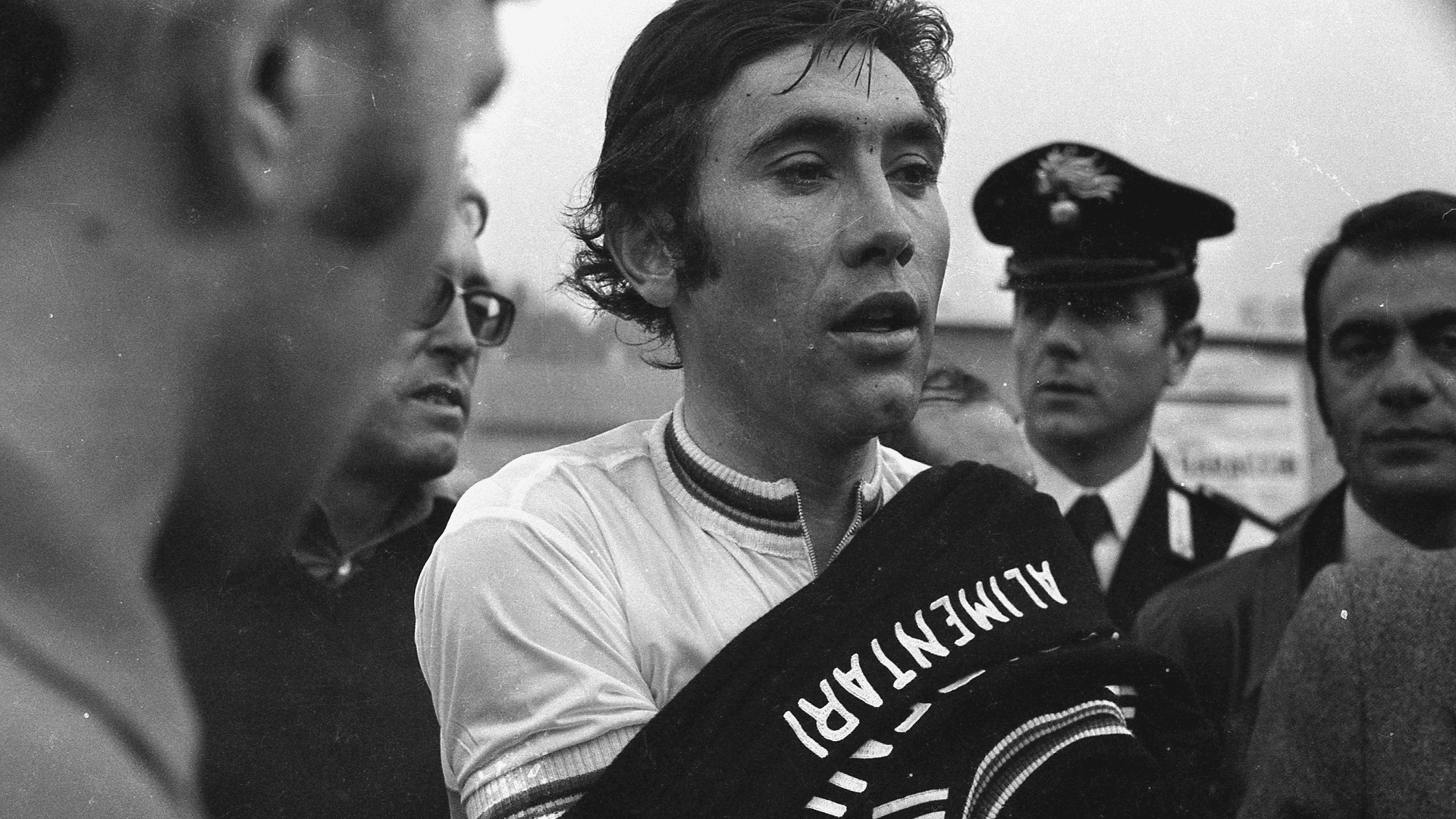
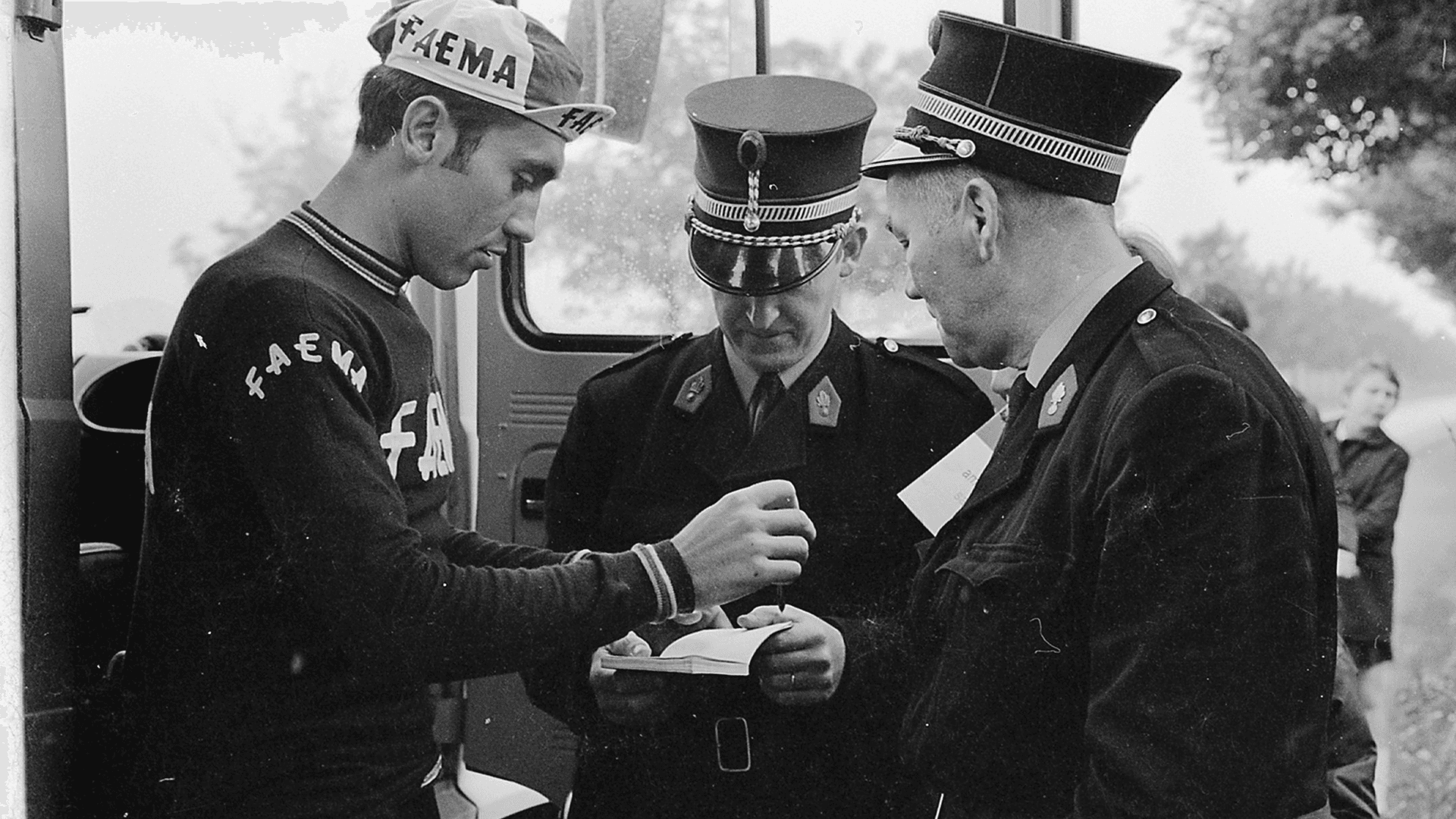
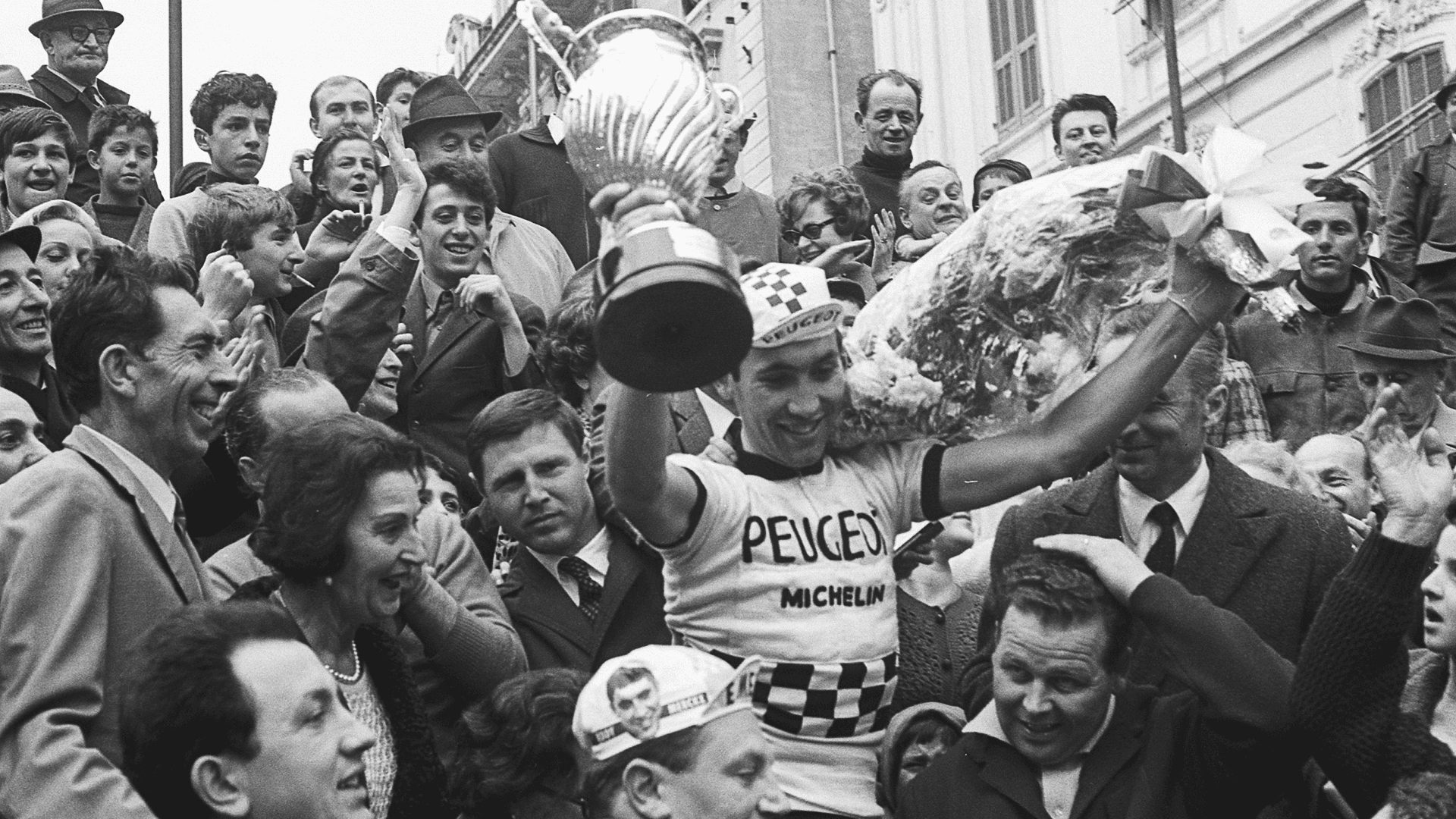
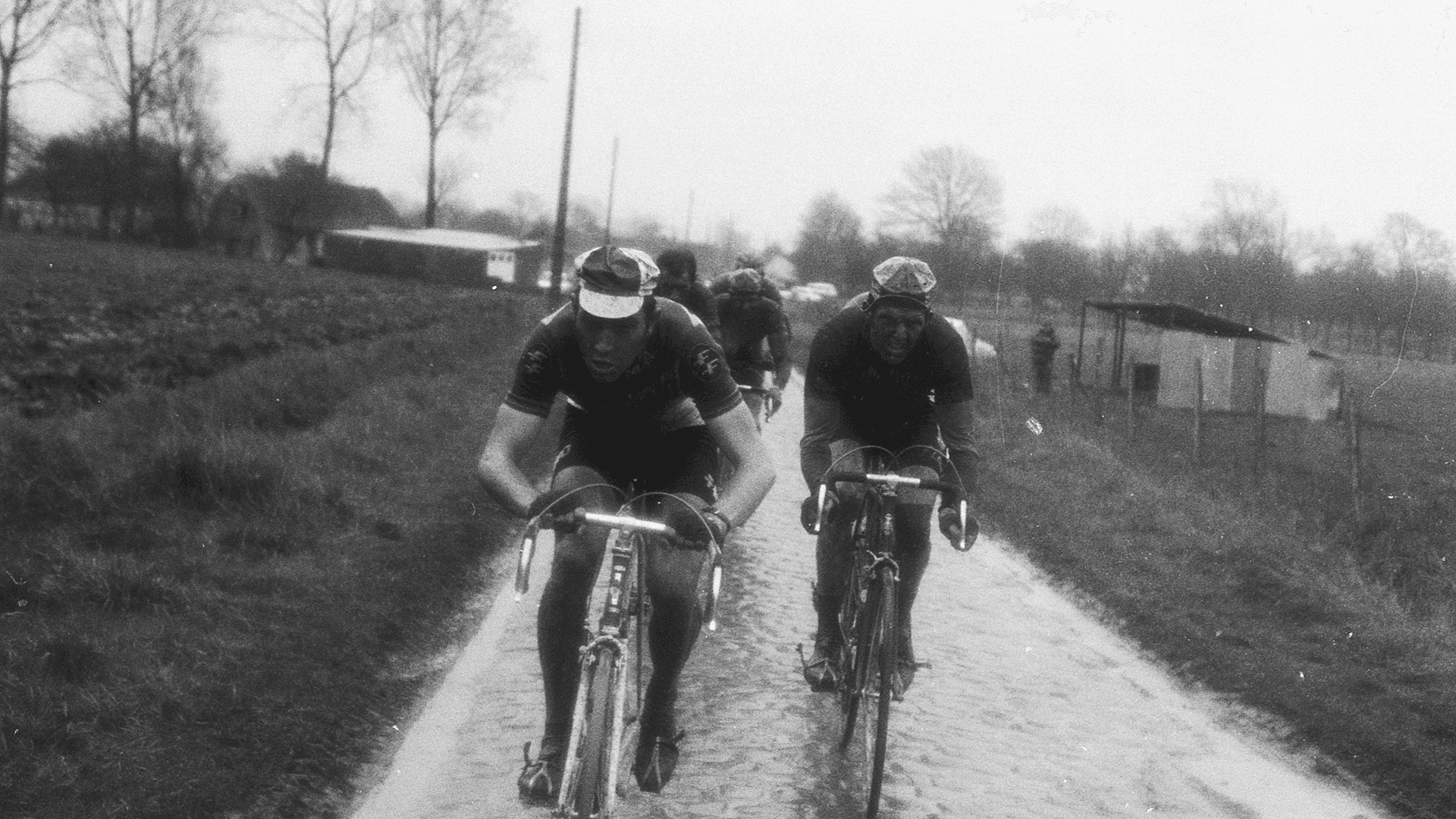
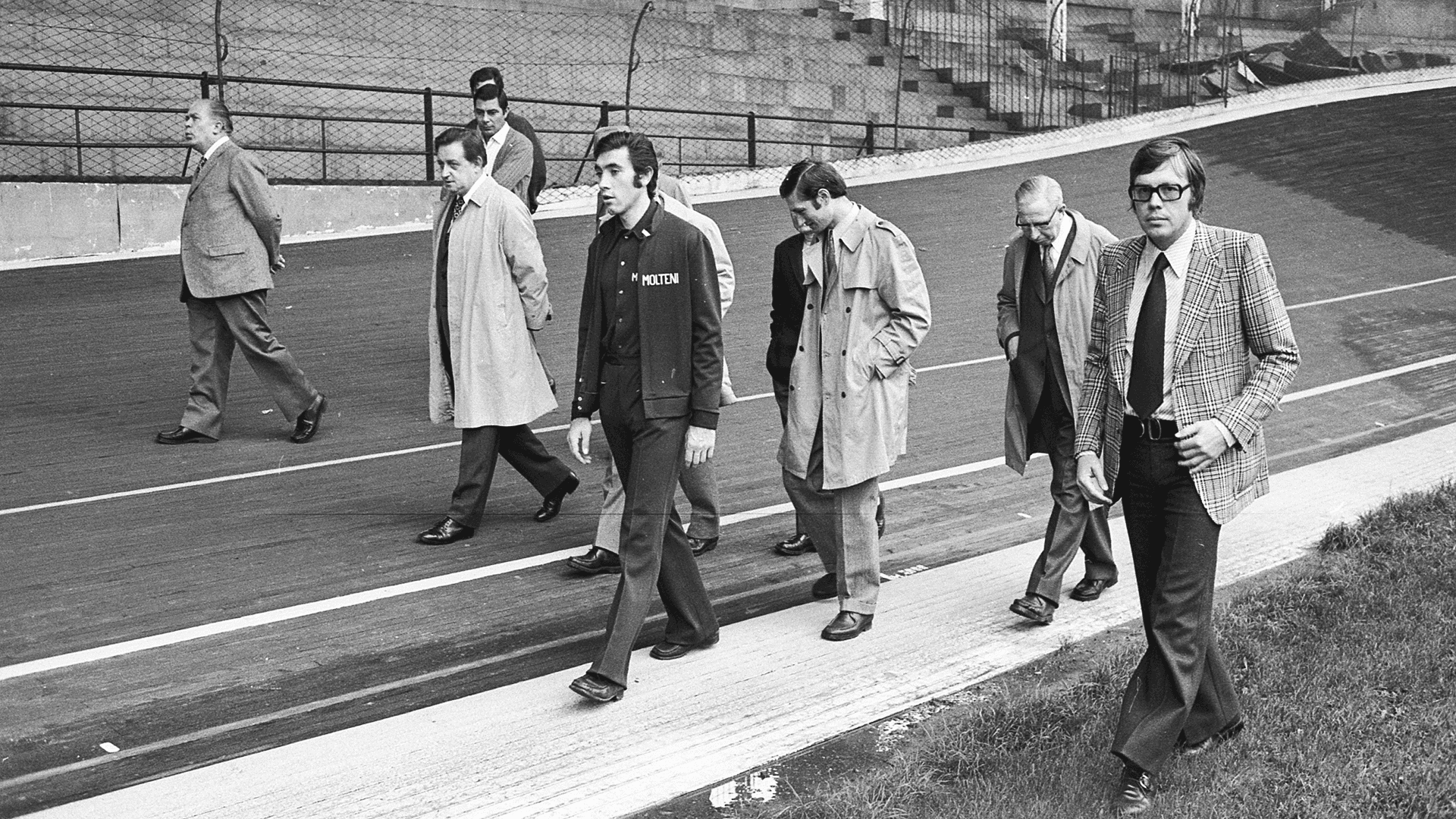
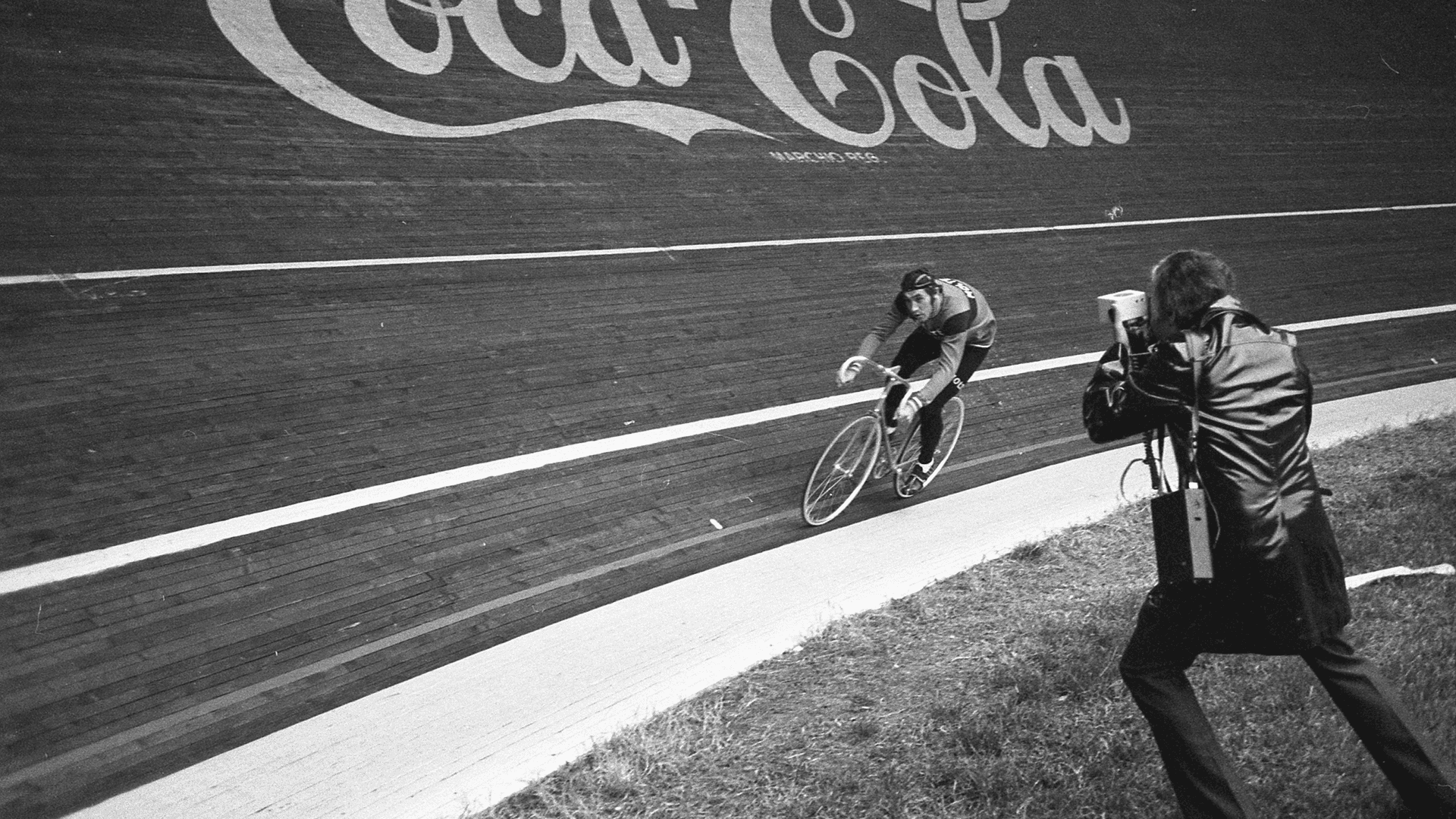
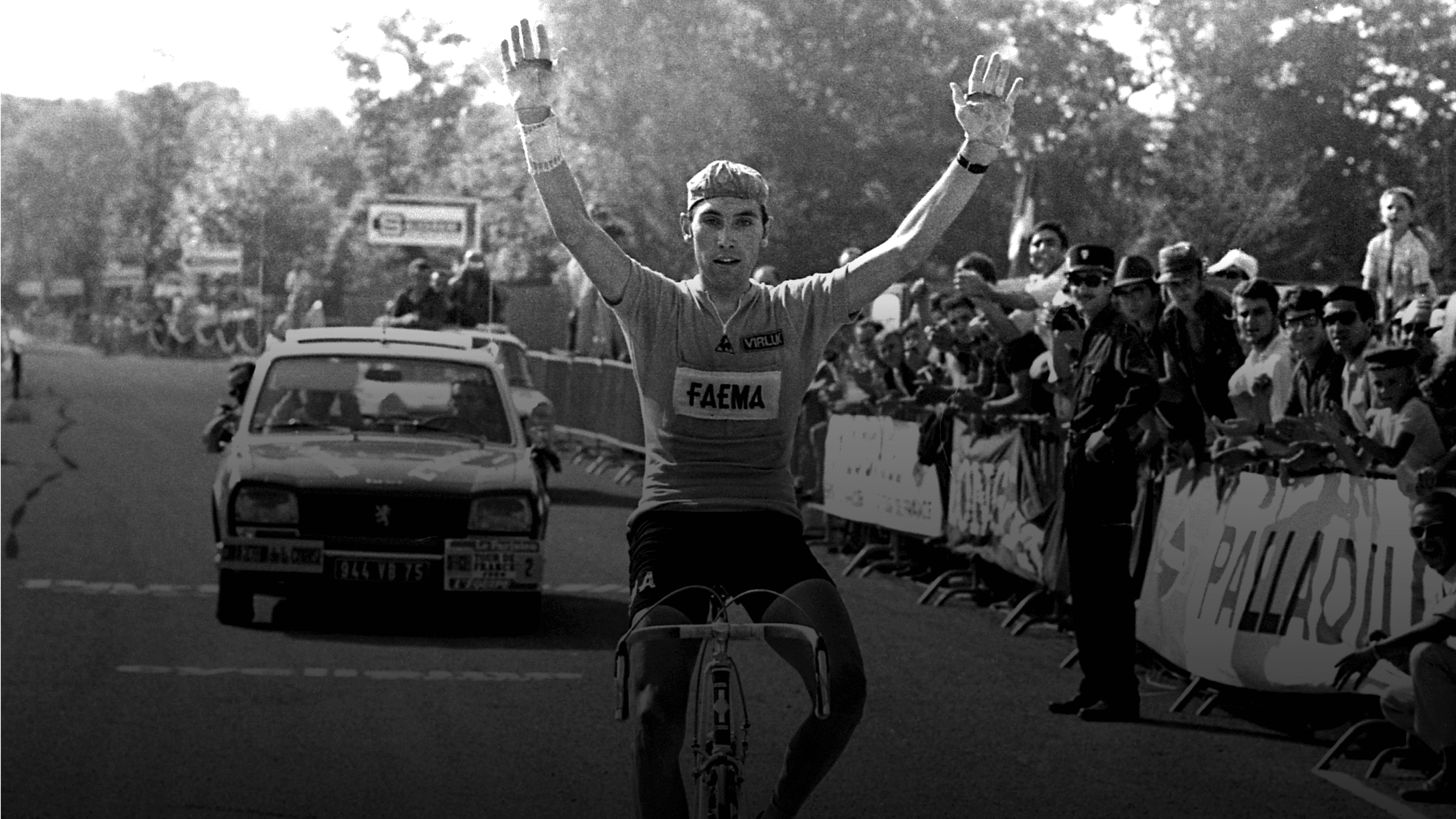
Archive photographs published with the film. Rapha’s page runs them without credit; 6 Day Films credits its black-and-white archive to Tonny Strouken, whose original photographs are credited in the film. Courtesy of 6 Day Films
Started on cyclists’ money
The film was shot in just under two years, because of how it was paid for. “We avoided money with strings, from networks or streamers, because we wanted to protect the family and the integrity of the film,” Donaldson says. “Every single pound that we raised came from cyclists and cycling enthusiasts,” he said in January 2026. That seed money is on screen. The fourth title card is a list of twenty-one names under the words “Generously supported by”. The first is Simon Mottram, the founder of Rapha, who raised the first round and opened doors to interviewees. The end credits list interviews filmed in Belgium, Denmark, France, Italy, Spain and the UK.
What that independence bought is on screen. Pablo D’Ambrosi’s edit moves by episode, out of order: the 1973 Giro, the crash at Blois, the Hour in Mexico City, then back to Savona in 1969 and the stage to Mourenx that answered it. Nick Green wrote the score. Matt Fox and Jordan Stephens lit the interviews dark and warm, each subject in a room of their own: Merckx in a bike workshop, Claudine close enough to fill the frame. The archive comes from the family’s albums, from Tonny Strouken’s negatives, and from A.S.O., VRT, RAI and RTBF.
In November 2025, with the film’s narrative locked and only the archive footage outstanding, 6 Day Films negotiated a sponsorship deal with Rapha, which put its name in front of it. The first card reads “Rapha Presents”; the second, “A 6 Day Films Production”. Rapha has made short films about cycling for years. This is the first feature to carry its name, and it chose one already made by people who answered to nobody.
THE PALMARÈS
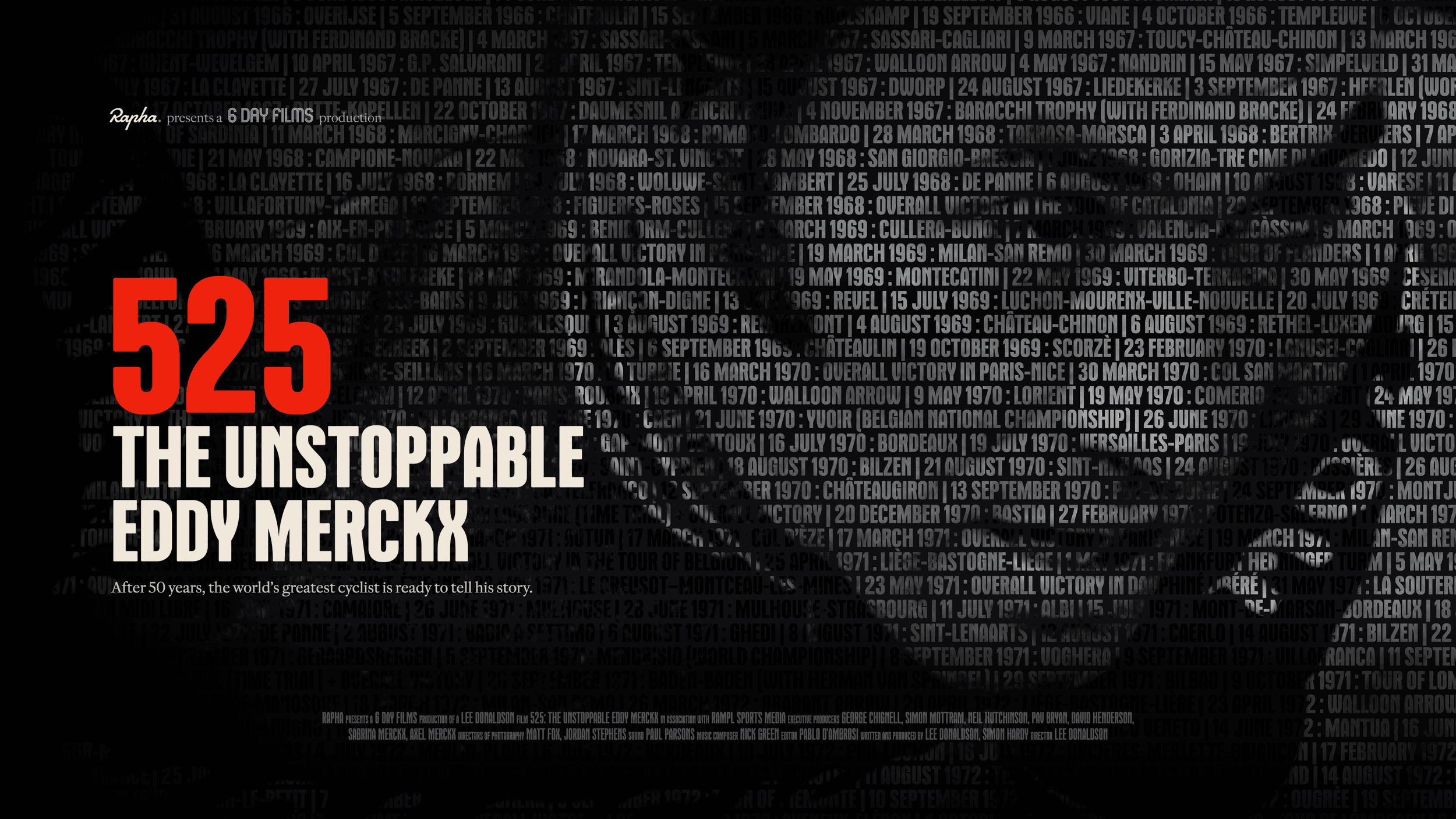
525
Career victories, amateur and professional, from Lettelingen in October 1961 to 1977. 6 Day Films publishes the full list.
Two rooms
The film has been shown twice in public. On 30 July 2026 it filled the Regent Street Cinema in London, with Mottram hosting and Axel Merckx and Johan Museeuw on stage. In August it went home to Brussels, to Cinema Galeries, with Eddy, Claudine, Sabrina and Axel in the room, alongside old teammates and Tonny Strouken. Johny Vansevenant, Merckx’s biographer, reported for Tuttobiciweb that the night ended in a standing ovation lasting several minutes, and that after a while Merckx joined in the applause. Both nights sold out.
On stage in Brussels, Axel said why the family made it: to show his father’s grandchildren and great-grandchildren everything he did. That is the film’s register throughout. It takes Merckx’s side at Savona and says so, and it gives the weight of the story to the people who were in the house: the wife who took everything else off his shoulders, the soigneur he calls a brother, the children who grew up with the bikes in the hall.
Its last word goes to Merckx, and it is a joke. Asked one more question, he grins: “I don’t remember. It was too long ago.”
The greatest record in cycling had been told a hundred times. It took his children to get the man to tell it himself.
THE BRAND REPORT
Panel of Judges
 Scott MellinFuturist | Board Member
 Franck CorberyExecutive Producer⎪Craft Lover
 Laurence StoffelDesigner | CCO & CPO
 Dan CoeStrategist | Publisher
Credits
- RaphaPresenter
- 6 Day FilmsProduction company
- Lee DonaldsonDirector, writer and producer
- Simon HardyWriter and producer
- Eddy MerckxSubject
- Claudine MerckxInterviewee
- Axel MerckxExecutive producer, interviewer and interviewee
- Sabrina MerckxExecutive producer and interviewer
- George ChignellExecutive producer
- Simon MottramExecutive producer; founder, Rapha
- Neil HutchinsonExecutive producer
- David HendersonExecutive producer
- Pav BryanExecutive producer
- Pablo D’AmbrosiEditor
- Nick GreenComposer
- Matt FoxDirector of photography
- Jordan StephensDirector of photography
- Paul ParsonsSound
- Tonny StroukenOriginal photographs
- Cédric RampelbergSales and distribution, RAMPL Sports Media
- RAMPL Sports MediaIn association with
- Bernard HinaultInterviewee
- Roger De VlaeminckInterviewee
- Sean KellyInterviewee
- Johan MuseeuwInterviewee
- Philippe GilbertInterviewee
- Bradley WigginsInterviewee
- Mark CavendishInterviewee
- Lotte KopeckyInterviewee
- Lizzie DeignanInterviewee
- Italo ZilioliInterviewee
- Marino VignaInterviewee
- Ernesto ColnagoInterviewee
- Paul SmithInterviewee
- Jørgen LethInterviewee