- Brand
- MAAP
- Type
- Activation
- Origin
- Commissioned
- Published
- 7 July 2026
- Score
- 3.75 / 5
MAAP takes the swap-out kit off the rulebook and into Paris Fashion Week
Jayco AlUla is racing the Tour de France in a kit no regulation required — unveiled not at a race but at HYPERFORMANCE, MAAP’s own installation on Rue Étienne Marcel.
MAAP · Activation · Commissioned · 7 July 2026 · Score 3.75
In professional cycling, the swap-out kit is a garment born of the rulebook: when a team’s colors clash with a race leader’s jersey, the riders change clothes. Teams have learned to make theater of the requirement — EF’s Giro change kits, starting with the 2020 Palace collaboration and its ducks, turned the obligation into an annual fashion moment — but the rule was always the alibi. The clash made them do it.
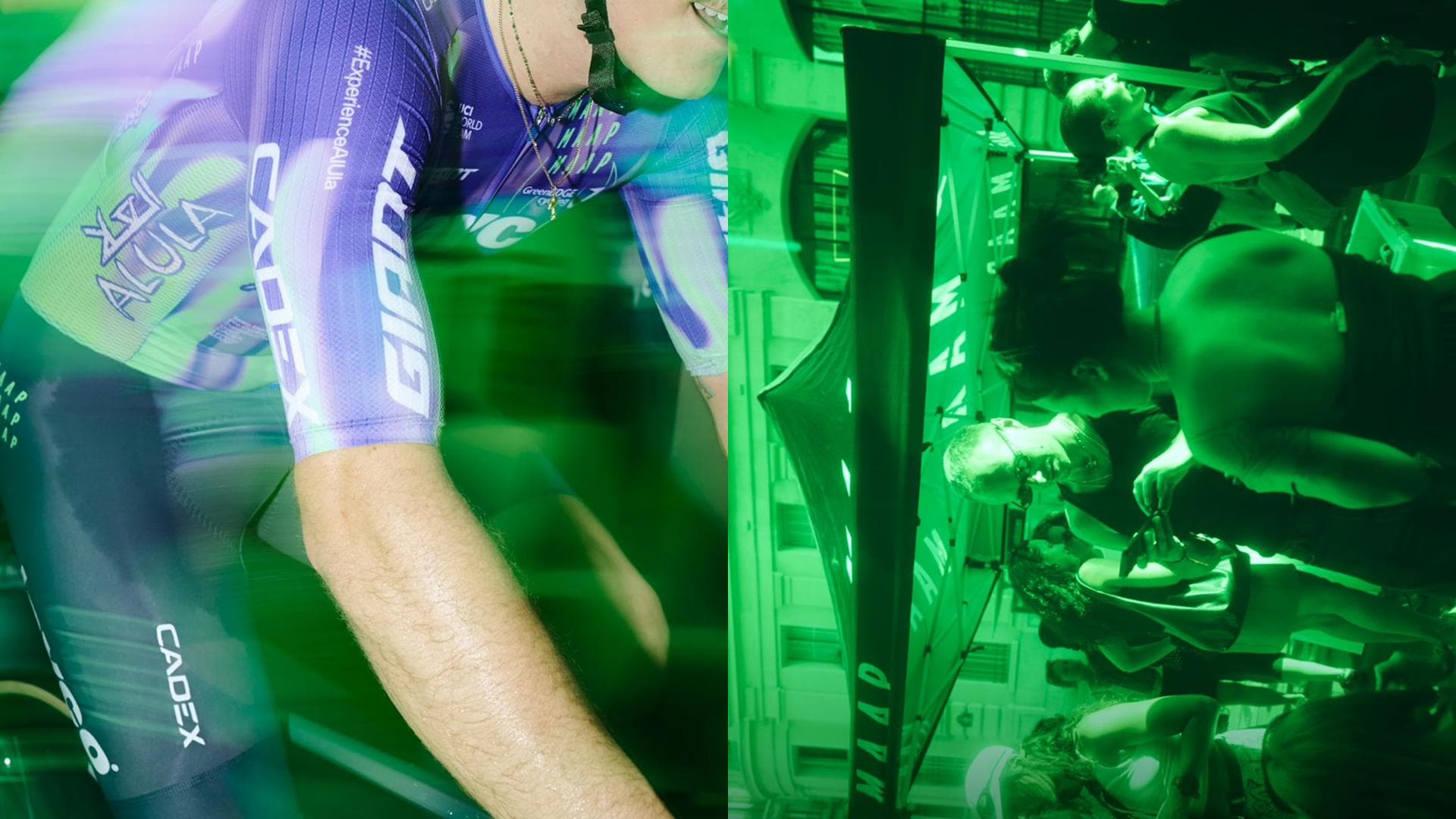
On June 25, in a room at 36 Rue Étienne Marcel in the 2nd Arrondissement, MAAP unveiled a swap-out kit with no alibi. There was no leader’s jersey to avoid, no UCI mandate, no clash on the calendar — and no waiting in reserve, either. This is the kit Jayco AlUla is actually racing the Tour de France in, from stage 1, swapped in for the team’s regular season colors by nothing but choice. “Racing the Tour in this kit is about standing out and showing our ambition right from the first stage,” said Brent Copeland, general manager of Team Jayco AlUla.
Dropping the alibi is the idea, and it’s a sharp one. Where EF’s change kits answer a regulation with wit, MAAP’s answers nothing at all — it takes a format that exists as an instrument of compliance and uses it as an instrument of pure authorship.
The kit itself evolves the MAAP × GreenEDGE “Aurora” identity — the purple that already made Jayco AlUla among the most distinctive teams in the peloton, the signature flame motif — and cuts it with electric green. It is being worn, right now, at the Tour de France. It enters the Index this week as an activation, because the garment is only half the work. The other half is how it came to life.
The room
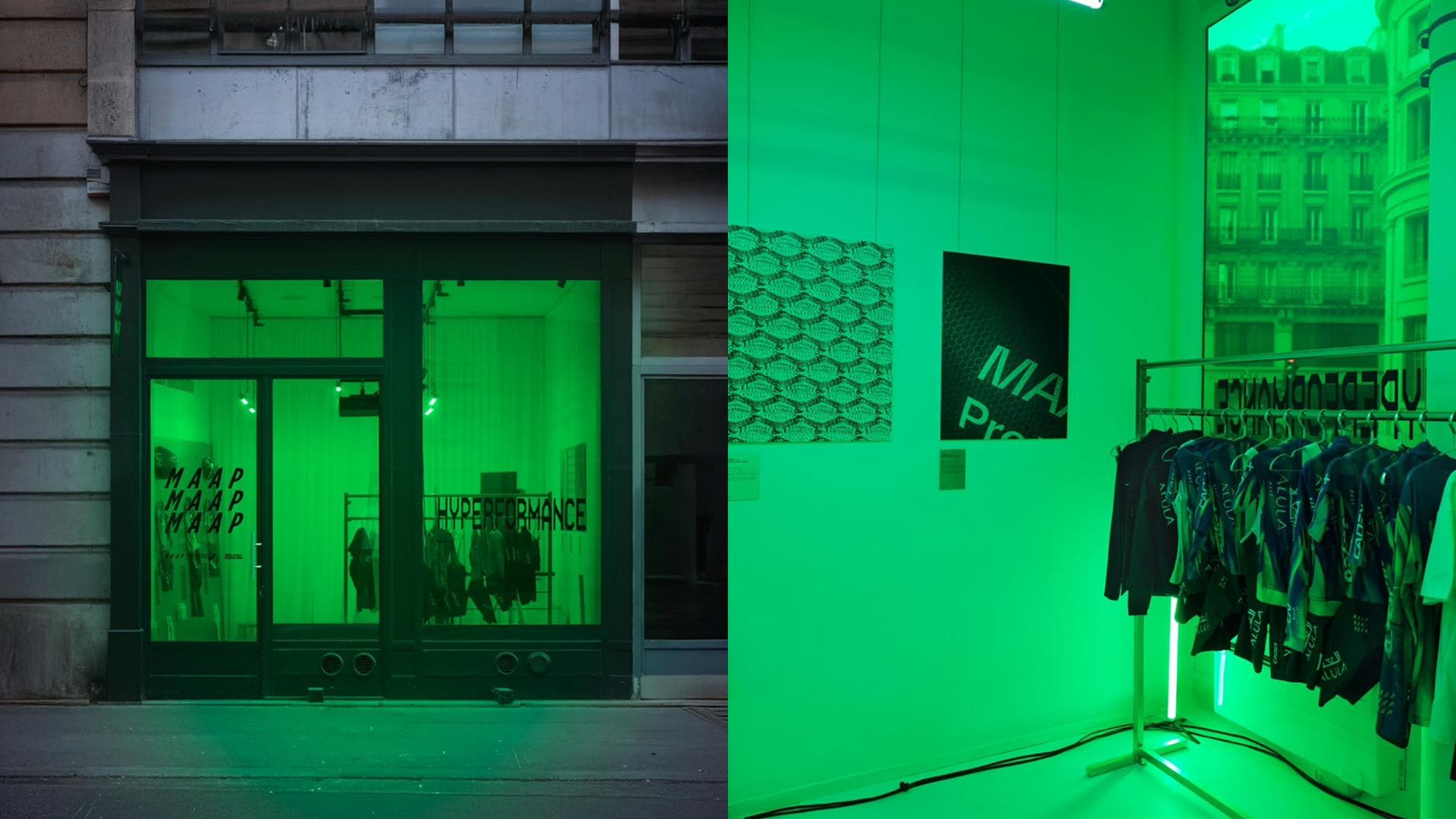
The installation was called HYPERFORMANCE, and the name carries the conviction: that WorldTour performance apparel — the material innovation, the aerodynamic obsession, the technical development behind dressing a professional cyclist — belongs in the same conversation as contemporary design. “The project brings elite cycling technology into a cultural setting rarely occupied by professional sport,” Glisovic said. The stated aim was to highlight the craftsmanship behind WorldTour apparel; the actual effect was to hang a race kit the way a gallery hangs work.
MAAP did not stage this alone, and the choice of company is telling. HYPERFORMANCE was presented with Mental Athletic, the Paris cycling-culture magazine and studio that sits at the exact intersection MAAP was reaching for — a co-signer with real standing in both the city’s cycling community and its creative scene. The exhibition ran open to the public from June 26 to 28, three days when anyone in Paris could walk in off Rue Étienne Marcel and stand in front of a WorldTour kit presented as a designed object.
“In professional cycling, you’ll often only see change when a rule enforces it. Our goal was to turn that on its head.”
Misha Glisovic — Chief Creative Officer, MAAP

The choreography
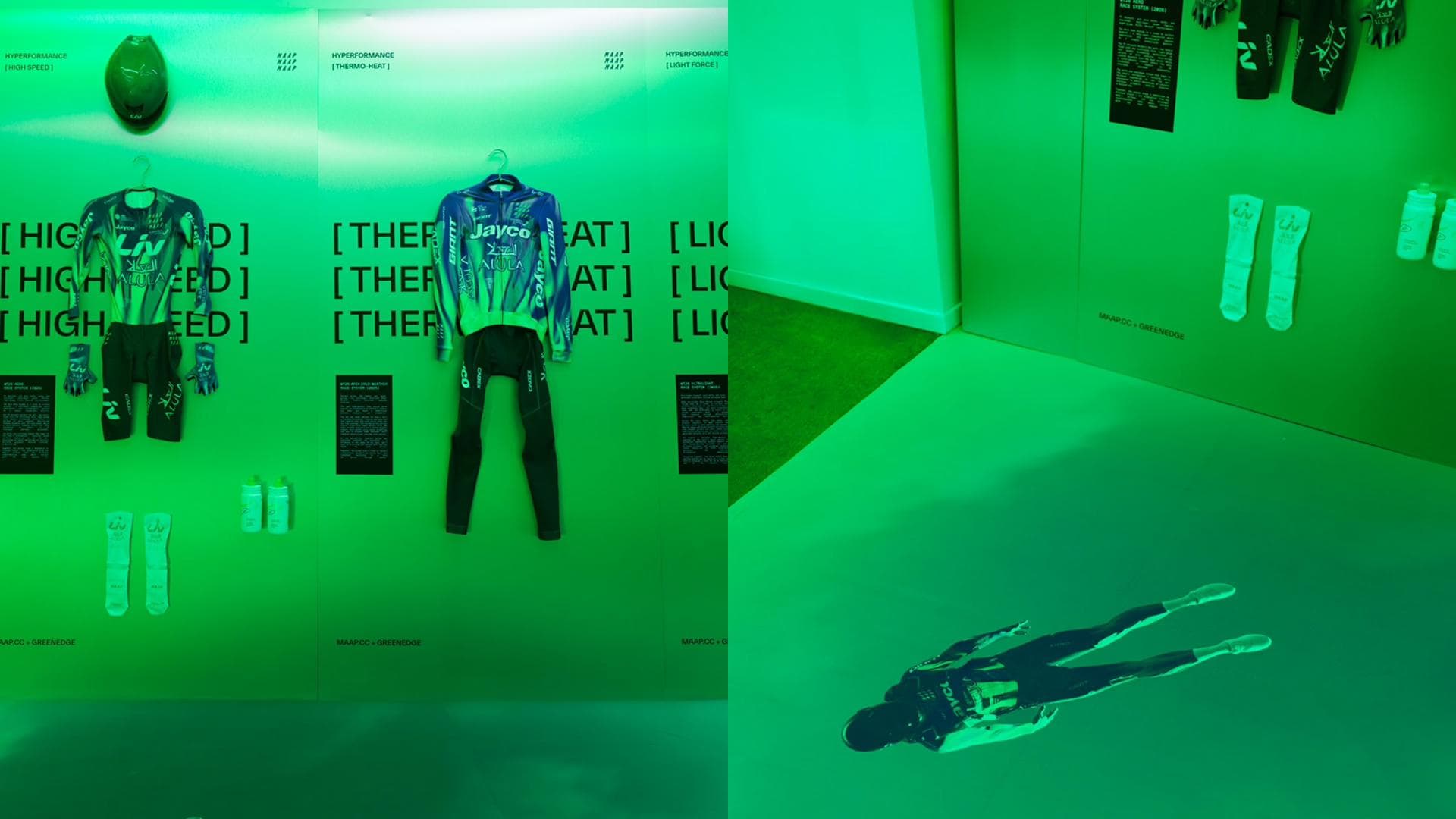
What makes HYPERFORMANCE worth studying is the sequence — six beats over five weeks, each one feeding the next. June 25: the kit debuts at the installation, in front of fashion week rather than cycling media. June 26–28: the room opens to the public. June 30: the kit goes on sale — 150 pieces worldwide, with a mechanic that turns scarcity into narrative: once the 150 are gone, the design retires permanently to the archives. July 4: the Tour de France departs Barcelona, and the kit is on Jayco AlUla’s backs for three weeks of the biggest broadcast in the sport. August 1: the second act, when Liv AlUla Jayco debuts the same design at the Tour de France Femmes in Lausanne.
Read that sequence again as a media plan. There isn’t one — or rather, the race is the media plan. MAAP paid for a room in Paris and 150 garments; the Tour de France supplies three weeks of global distribution, and the Femmes extends the story into a fifth week. The commerce is real but deliberately small. The point of the number isn’t revenue. It’s proof of conviction: the retirement mechanic tells you the brand values the design’s integrity over its yield.
The edition
150
Pieces worldwide. Once they’re gone, the design retires permanently to the archives.
The difference between borrowing a stage and building one is the difference between attending culture and making it.
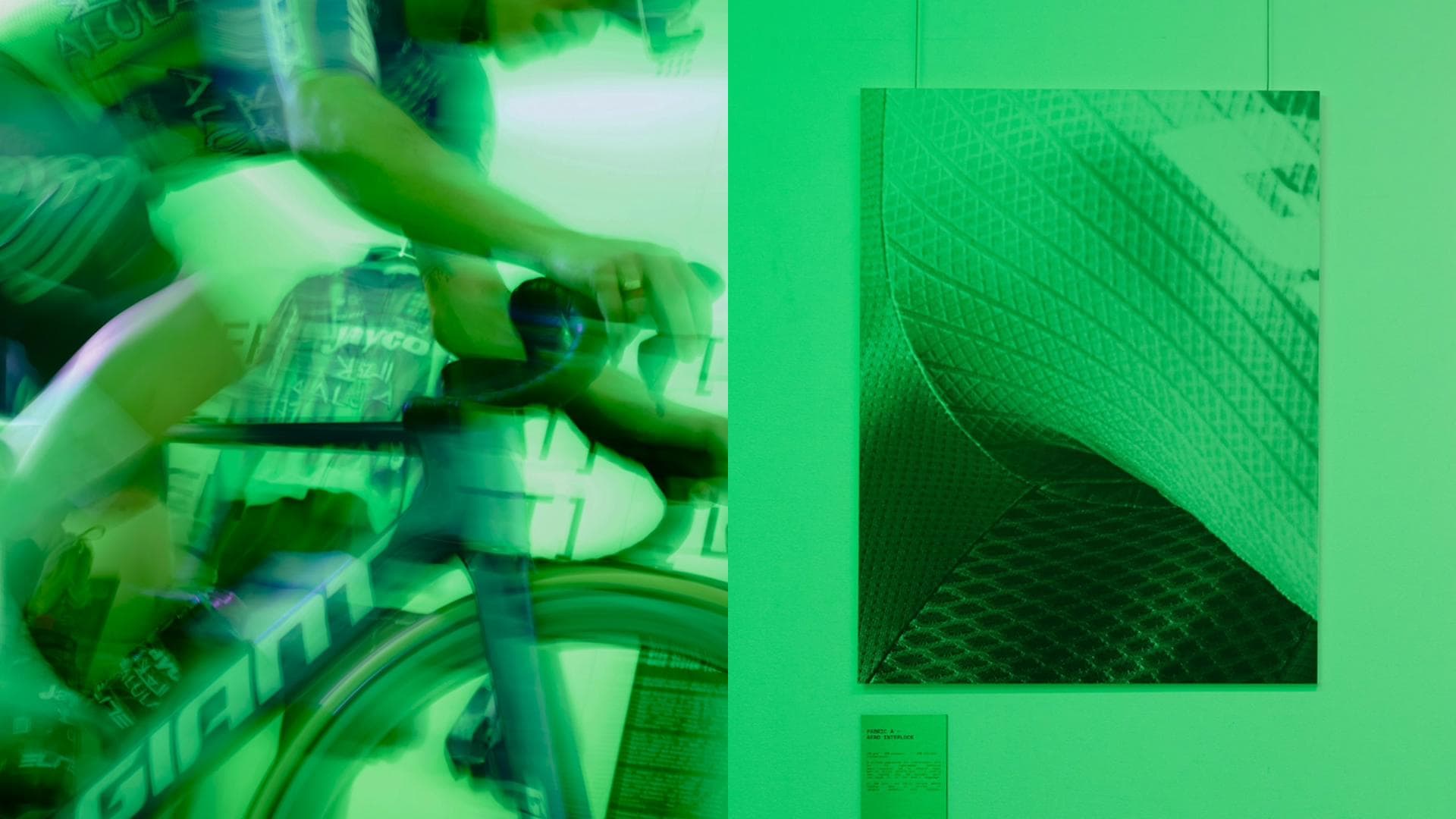
The room, the kit, the drop — HYPERFORMANCE across its five-week arc. Copyright © MAAP
The verdict
HYPERFORMANCE enters the Index on the strength of its idea. The genre it works in is inherited — EF proved six years ago that a change kit could be a cultural object — but MAAP found the one move left in it: removing the rule that made the genre exist. That inversion can’t be transplanted to another brand, because the punchline is MAAP’s own positioning. The staging earns its place too: the sequencing from gallery to drop to broadcast is as designed as the kit.
What we’re withholding is the superlative. We haven’t stood in the room, and the kit — excellent as it is — evolves an existing design language rather than inventing one. The 150 units’ sell-through isn’t public yet. And the second act is still ahead: the design’s appearance at the Femmes on August 1 will tell us whether this was a moment or a chapter.
Credit
- Misha GlisovicChief Creative Officer